
ALIGNMENT BEFORE UNITY
Why Shared Understanding Must Come Before Collective Action
Statesman Roland Fru Developed within the Southern Cameroons Legal Clarity Framework For civic education and institutional development
3/22/20264 min read
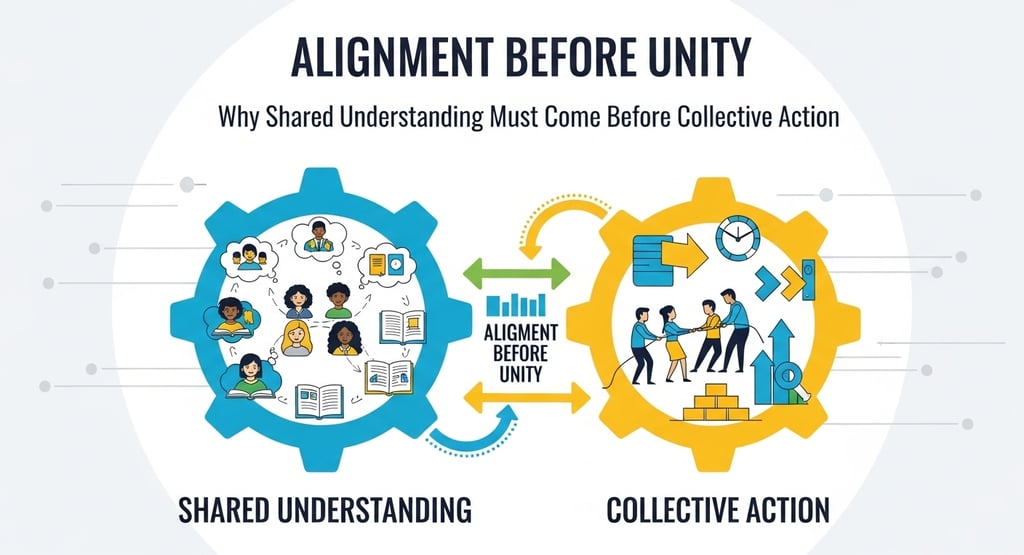

Understanding Alignment and Its Importance
Alignment is an essential principle that underpins effective collaboration within any group or system, serving as the shared foundation that guides collective efforts. It encompasses a cohesive understanding of goals, values, and methodologies, which are crucial for working harmoniously. Failure to establish alignment can lead to confusion and miscommunication, negatively impacting productivity and morale. Without a clearly defined alignment, members of an organization or initiative may pursue divergent objectives, ultimately leading to inefficiencies and conflict.
For instance, consider a nonprofit organization aiming to address food insecurity. If team members have differing interpretations of the mission, one might focus on immediate meal delivery while another advocates for long-term solutions like community education. The lack of alignment in their understanding can create conflicting actions, reducing overall effectiveness. A well-aligned team, however, will engage in dialogue to articulate and agree upon a shared vision, allowing their individual efforts to contribute cohesively to the overarching objective.
Furthermore, alignment is not just about individual understanding but also about creating a framework whereby all stakeholders can operate collaboratively. This is particularly evident in corporate settings, where misalignment can inhibit synchronization between departments, leading to siloed operations. For example, if a marketing department is unaware of changes in product development, it may communicate outdated information to clients, which can damage the organization’s reputation. Conversely, when alignment is prioritized, departments work synergistically, facilitating clearer communication and enhancing overall organizational performance.
In summary, understanding and implementing alignment are critical for any collaborative endeavor. It not only clarifies roles and expectations but also fosters an environment where collective efforts can thrive without the distractions of miscommunication and confusion. The importance of alignment should not be underestimated as it lays the groundwork for a united front in achieving shared goals.
The Dangers of Pursuing Unity Without Alignment
Pursuing unity without prior alignment can lead to significant complexities and challenges within teams or organizations. When individuals or groups come together under the banner of unity, it often creates an illusion of coherence, masking underlying disagreements and misalignments. The resulting chaos can impede the group’s ability to work effectively towards common goals, leading to inefficiencies and misunderstandings.
One prominent instance illustrating this danger can be observed in various organizations during times of merger or collaboration. Teams that unite without clear alignment on objectives often face heightened tensions. Individual members may operate under different assumptions, leading to conflicts that could have been prevented through open dialogue and alignment of expectations. In its absence, these differences can manifest in poor communication, decreased morale, and ultimately, project failures.
Moreover, as teams strive for unity, they may inadvertently suppress dissenting opinions—a phenomenon that can stifle innovation and critical thinking. Without a foundation of shared values and clarity regarding the group’s mission, pursuing unity becomes a superficial endeavor. It creates an environment where individuals feel pressured to conform rather than contribute their unique perspectives.
Another critical aspect to consider is how lacking alignment can lead to decision-making paralysis. When teams are unclear about their goals and objectives, reaching consensus becomes increasingly difficult. This can slow down their response times and reduce their effectiveness in rapidly changing environments. Therefore, it is essential for teams to first establish a framework of alignment that guides their objectives and interactions. Only by building a solid foundation of clarity and coherence can organizations hope to foster true unity that drives progress and success.
The Step-by-Step Process
Achieving true unity within any organization or community necessitates a systematic approach. The first vital step is ensuring alignment among all stakeholders. Alignment refers to the shared understanding and commitment to a common goal or mission. To cultivate alignment, it is imperative to engage all parties in open dialogue, allowing for collaborative discussions about objectives and expectations. Regular meetings and team-building activities can enhance this alignment by fostering trust and transparency.
Once alignment is established, the next step involves clearly defining problems. A precise definition of the issues at hand helps to focus the group's efforts. Stakeholders should collaboratively identify the core problems, weighing them against the agreed-upon goals. Techniques such as root-cause analysis can be useful tools in this stage, as they help uncover underlying factors contributing to the issues. This step prepares the groundwork for coordinated actions.
The coordination of efforts follows problem definition. This phase involves organizing the resources and strategies needed to tackle the identified issues effectively. It is beneficial to establish roles and responsibilities within the group to ensure everyone understands their contributions to the overarching mission. Project management tools can facilitate coordination by tracking tasks, deadlines, and progress, thus keeping all parties accountable and focused.
Finally, public education serves as a crucial element of the process. Engaging the broader community not only raises awareness about the challenges faced but also garners support for proposed solutions. Tools such as social media campaigns, informational workshops, and community forums can promote transparency and foster an educated, engaged populace. Effective public education also involves integrating feedback from the community, ensuring that their voices are not only heard but valued.
Leadership's Role in Promoting Clarity and Unity
Effective leadership is essential for cultivating an environment where alignment and clarity are prioritized within teams. Leaders have the unique responsibility of bridging gaps in understanding and ensuring that every team member is on the same page. According to statesman Roland Fru, clarity is the precursor to unity, making it imperative that leaders actively engage in fostering a shared understanding of goals, values, and expectations among their teams.
A successful leader must first establish a clear vision, articulating the collective objectives in a manner that resonates with all members. This involves open communication, where leaders encourage dialogue and the sharing of diverse perspectives. By facilitating discussions that promote mutual understanding, leaders can help their teams navigate complexities more effectively, reducing ambiguities that can lead to discord.
Furthermore, leaders should exemplify the values and behaviors they wish to see in their teams. This modeling of clarity leads to a culture where team members feel empowered to express their thoughts and concerns without the fear of dismissal. Such an environment nurtures a sense of belonging and commitment to the team's mission.
Fru asserts that unity cannot be achieved without prior alignment. Leaders must ensure that team members understand their roles within the broader framework and how their contributions align with the organization's purpose. By frequently revisiting and reiterating the core values and objectives, leaders reinforce the connections among team members, solidifying the foundation of unity.
Ultimately, the responsibility of leaders extends beyond mere direction. It encompasses the active promotion of an atmosphere where alignment is sought after, fostering relationships that support both clarity and unity within the team. By prioritizing these elements, leaders can guide their teams toward achieving shared success.

Contact
Reach out to us anytime for clarity.
Phone
support@scclarity.org
+1(281) 315-9387
© 2026. All rights reserved.