Legal clarity
Follow the documentary record wherever it leads. Distinguish facts, interpretations and unresolved questions; make claims traceable.
Purpose & principles
A Southern Cameroons civic research and institutional development initiative, founded by Roland Fru.
Our mission
Build a shared, verifiable understanding of the Southern Cameroons question and the capabilities needed for responsible institutional work.
We bring historical research, accessible public education, builder development and transparent coordination into one connected framework.
The initiative investigates whether the transition contemplated in 1961 was completed through identifiable legal and constitutional instruments. We publish the available record, identify evidence gaps and seek independent expert review. The book’s method is to investigate the question with discipline and follow the evidence.
Treaty validity, domestic constitutional measures, consent, implementation and UN registration are distinct questions. Non-registration under Article 102 does not, by itself, establish that an agreement is legally invalid.
UN Treaty Handbook · registration & validity ↗
Examine the sourcesThe book’s six commitments
Follow the documentary record wherever it leads. Distinguish facts, interpretations and unresolved questions; make claims traceable.
Pursue peaceful, lawful processes. Protect civilians, dignity and safety; do not ask people to pay for political aims with avoidable harm.
Teach the question and the evidence. Test understanding in people’s own words and make study accessible across language and reading levels.
Develop competence and character through useful work. Measure leaders by what they build and the capacity they develop in others.
Create durable structures, clear responsibilities and accountable stewardship. Prefer reliable systems to dependence on one personality.
Hold a long horizon. Treat legal clarity as the foundation for human capability, productive institutions and a future worth building.
Organization & accountability
A lean leadership model: strategic direction, an integrator, and three functional leads.
This is the operating model for development. Apart from the founder, named appointments are not listed here. These roles describe the work; they do not imply an established government or political mandate.
Sets the long-term direction, protects the mission and develops strategic relationships.
Coordinates priorities, resolves operational overlaps and holds the three functional leads accountable.
Civic education, community study, communications, partnerships and responsible public engagement. The Volunteer Video Editor & Content Creator serves within this department, producing sourced videos, captions and visual content.
Source verification, archives, research outputs, builder training and consistent program delivery.
Contribution records, spending controls, budgeting, reporting and administrative continuity.
The Institutional Framework describes four practical units. They deliver the work under the leadership model rather than creating another layer of department heads.
| Delivery unit | Primary functional home | Intended output |
|---|---|---|
| Legal & International Engagement | Research & Program Delivery | Verified evidence, research papers and documented engagement |
| Financial Transparency & Funding | Finance & Administration | Controlled budgets, contribution records and financial reporting |
| Community Stability & Peace | Public Engagement & Partnerships | Responsible education and peaceful, structured community dialogue |
| Communication & Doctrine | Public Engagement & Partnerships, with research review | Clear, sourced and consistent public communication |
Accountability
The standard is a usable output: a verified source, a clear explanation, a completed assignment or a documented institutional response.
Public financial and progress reports will appear here when they have been prepared and verified. No financial totals, audited accounts or completed milestones are claimed on this page.
Support & stewardship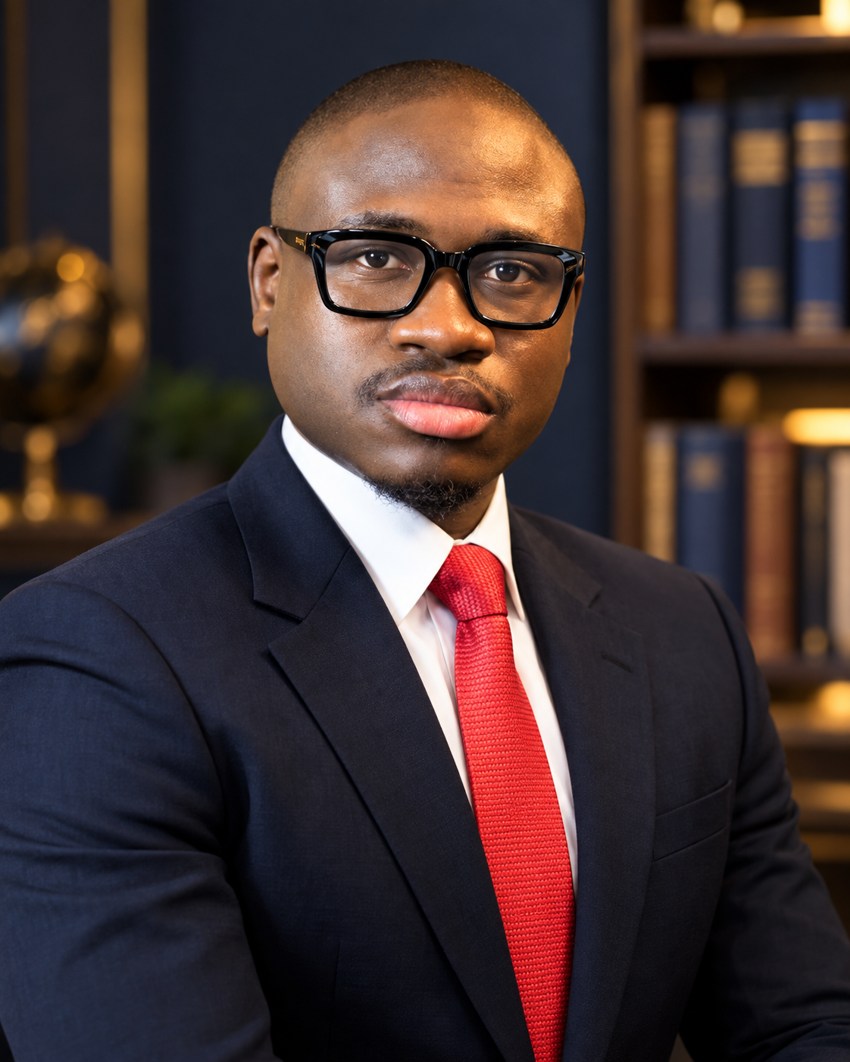 Founder · author · speaker
Roland Fru
Roland Fru is the founder behind this work and the author of the supplied doctrines and frameworks. His public work brings the Southern Cameroons question into discussions of history, legal clarity and responsible institution building.
Explore his books, speaking topics, interviews and media resources on the dedicated speaker website.
Visit Roland Fru’s speaking website
Research beyond the page
The Southern Cameroons question takes the inquiry into international records as well as constitutional history.
Roland Fru’s research journey includes visits, archival inquiry and conversations about the documents behind the 1961 transition. The purpose is to identify the evidence, examine it carefully and make it accessible for public study.
This personal visit photograph does not imply United Nations endorsement of Roland Fru or the initiative.
Explore the White Paper and primary documents ↗Begin with understanding
Study the evidence and distinguish what the record shows from the conclusions people draw.