01 / A personal account by Roland Fru
The phone call that changed my questions



The following is Roland Fru’s personal account. Dates, family events and research experiences are presented on his authority; documentary analysis follows.
At approximately 10 a.m. Houston time on May 22, 2023, I was studying in a coffee shop when my wife called. A relative of ours had been kidnapped. I went home. Suddenly, the conflict I had followed from a distance had entered our family.
Imagine receiving that call. Your family is frightened, relatives are scattered across different countries, and someone you love is being held by armed men. The demand was approximately US$22,000—roughly 11 million CFA francs, as we understood it at the time. Even finding the money offered no guarantee that our relative would return alive.
From 2017 until that call in 2023, I had not made the crisis the focus of my work. Now we needed to respond. Years earlier, I had read Never Split the Difference, by former FBI lead international kidnapping negotiator Chris Voss with Tahl Raz. I returned to my notes and drew on its approach to listening, emotional discipline and understanding the other party. [47,48]
I consulted a lawyer back home and a former police commissioner I knew. From the communications available to us, we understood the captors to be separatist fighters. We organized the family in one WhatsApp group, limited conflicting messages and designated one trusted person to communicate with the captors. I supported that effort from Houston.
We tried to understand what the captors were saying, acknowledge their concerns and maintain a channel through which our relative might come home. Listening did not make the kidnapping acceptable. It helped us manage a situation in which anger and contradictory messages could put a life at greater risk. For more than a month, our family lived with anxiety and sleepless nights. Our relative eventually left the camp alive. I remain grateful to everyone who helped. The book gave me a practical framework; the outcome also depended on our family, local assistance and circumstances we could not control.
During the conversations, we asked what the captors wanted for their own lives. Some spoke of leaving college, having families, lacking work and wanting a better future. Those statements did not excuse their actions. They stayed with me because they raised another question: what would it take to give young people a credible path toward a different life?
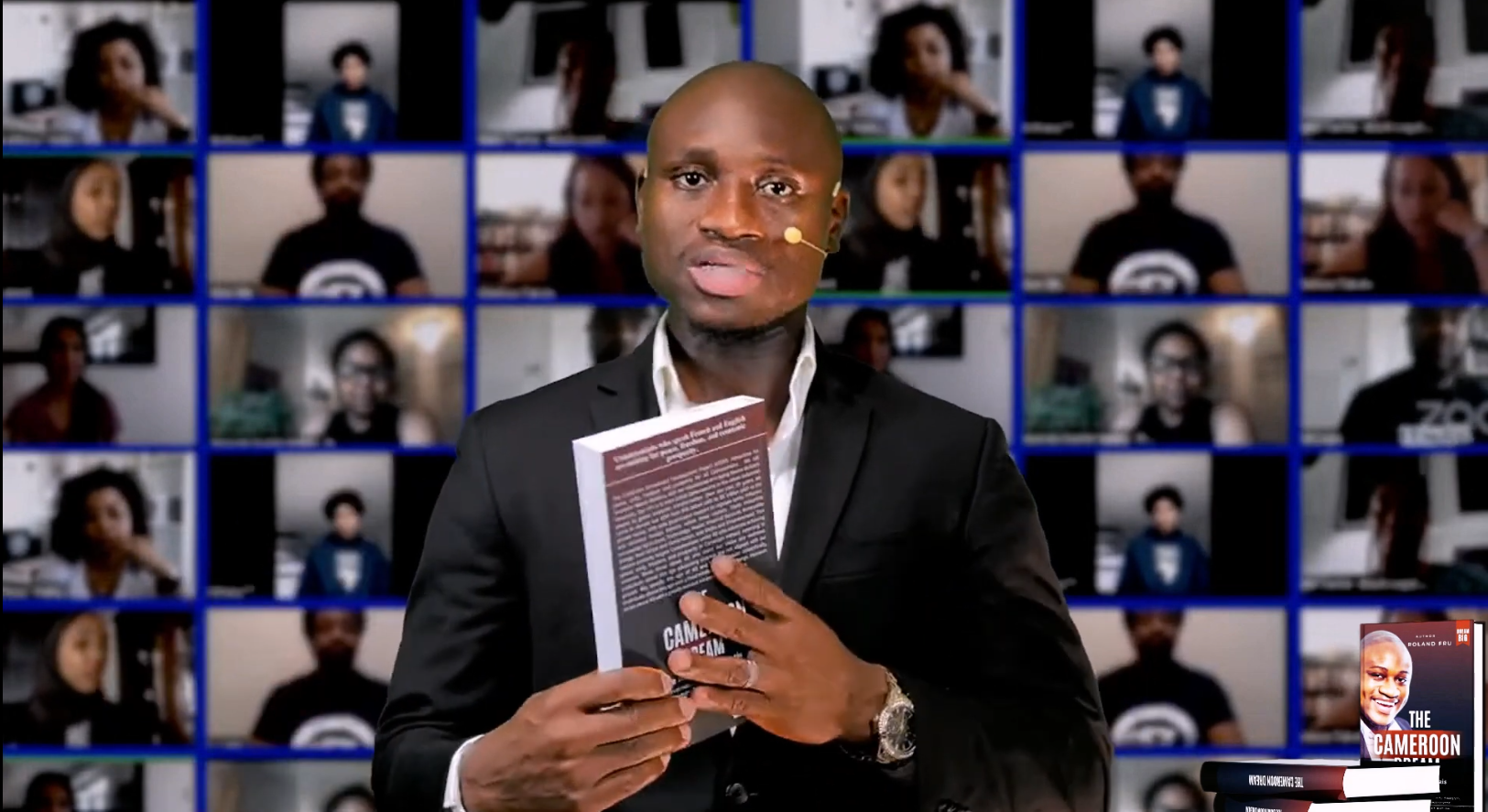
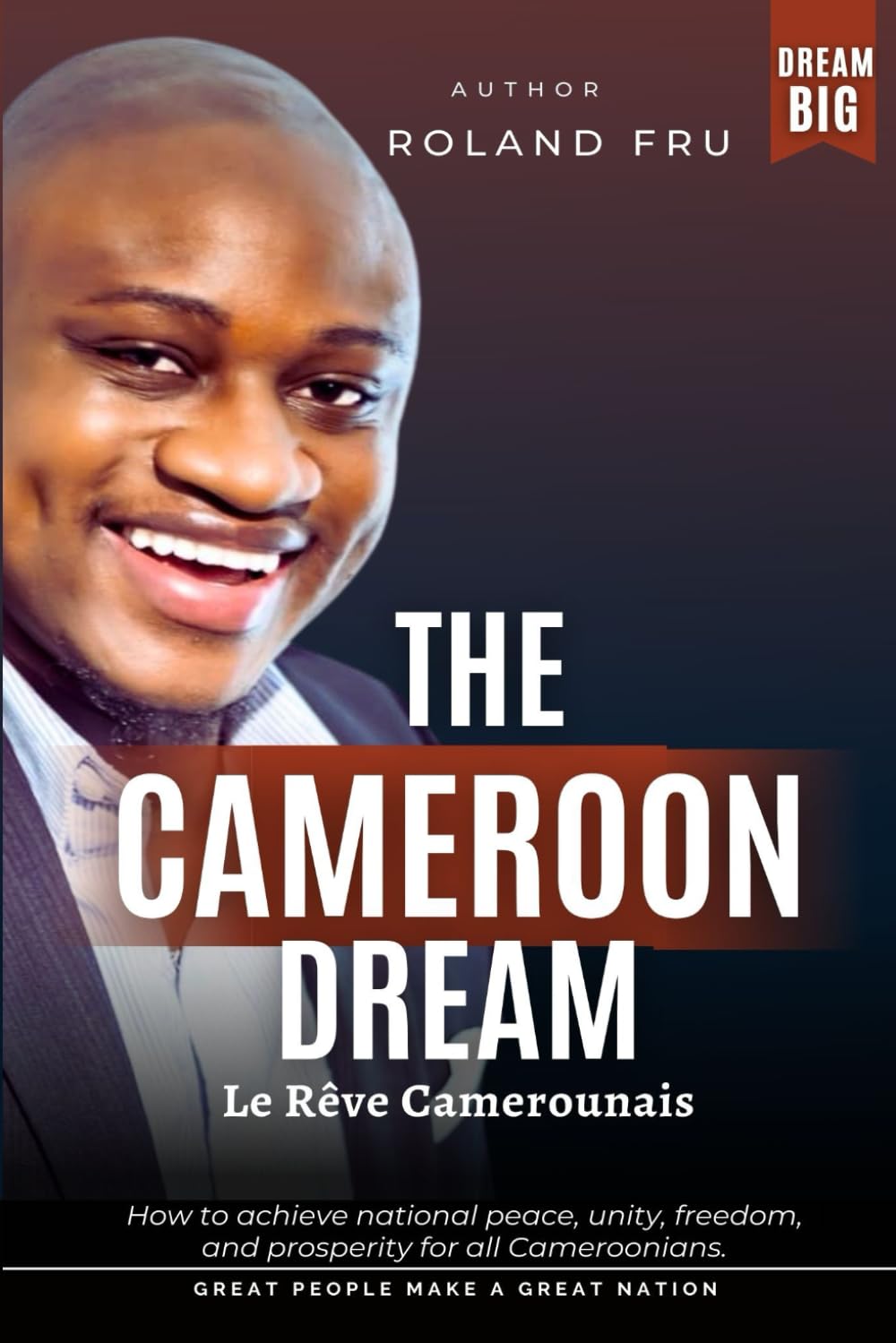
My first response was economic. Studying development in the United States, South Korea and China, I developed a twenty-year plan focused on seven industries shaping the global economy. The Cameroon Sustainable Development Project sought to build skills, strengthen private enterprise and encourage productive cooperation with government. This development work informed The Cameroon Dream. I reached out to the Prime Minister, historians and young people to explore how the initiative could work.
People repeatedly raised the same obstacle: the absence of an enabling environment. As I encountered difficulties advancing the project, I began to see that a proposal for jobs and businesses could not, by itself, answer questions about institutions, accountability and political authority. I had started with unemployment. I now needed to understand the conditions under which development could succeed.
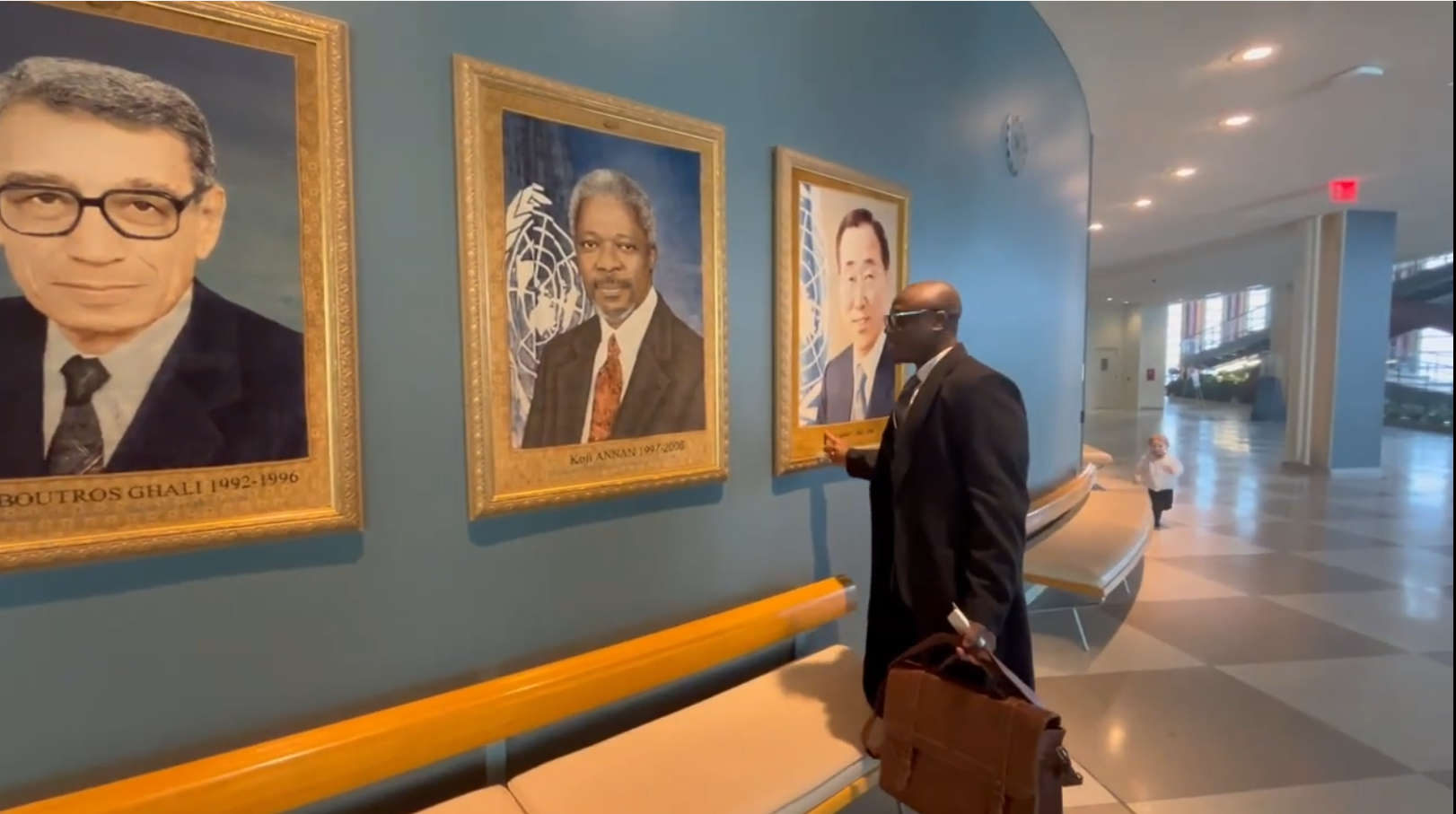
I turned to the mandate and trusteeship records, the UN resolutions, the plebiscite and the constitutional negotiations leading to October 1961. I wanted to distinguish what had been proposed, what had been decided and what had actually been completed. The inquiry took me to the United Nations and into correspondence with British archives and the authorities in Yaoundé. My searches have not produced an instrument that answers the central question in this briefing. I received a response from Yaoundé, but not a clear answer to that question.
As I encountered new information, I revised my understanding. Studying evidence requires more than collecting material that supports an existing position; it requires being willing to change one’s mind.
That journey led to The Southern Cameroons Question. I have reached a position about the problem that needs examination, while leaving the eventual settlement open to legal clarification, negotiation and public authorization. The pages that follow explain the historical and documentary basis of that position. My family’s experience explains why I began asking; the records must carry the argument.
I began by asking how we could create opportunity. The obstacles pushed me to examine the institutions and the historical record.

02 / From personal concern to public responsibility
Why I could not simply move on
Our relative returned alive. But something else about the experience stayed with me. I encountered accounts circulated by some separatist groups abroad claiming that he lived in Yaoundé and travelled to Bamenda to cause trouble. That was not the man or the circumstances our family knew. He lived in Bamenda and served young people in his community diligently.
The contrast was shocking. It made me ask: how many other victims had suffered violence, only to have misleading stories circulated about them? How many families lacked the opportunity to correct the record? I could not answer those questions with assumptions. They strengthened my resolve to listen carefully, distinguish claims from evidence and examine what could be established.
Adam Smith’s The Theory of Moral Sentiments helped me articulate that responsibility. In Part III, Chapter III, he imagines a catastrophic earthquake in China. A distant observer might lose more sleep over the prospect of losing his own little finger than over the deaths of people he has never met. But Smith then asks whether a humane person would sacrifice those lives to save his finger. His answer is no: conscience, reason and impartial judgment can correct the unequal force of our feelings. [49]
My family’s suffering had captured my attention. Our relative’s survival did not make the suffering of other families less important. I could have returned to ordinary life. Instead, I decided to study, speak and help raise global awareness of people whose lives I might never personally encounter.
I had invested serious work in a different starting point. My MBA capstone defended The Cameroon Dream: the possibility of unity and development through a twenty-year economic programme. I believed a shared national future could work. The historical documents later raised questions that appeals to unity alone could not answer. Development remained an objective; institutions, consent and legal clarity required closer examination.
An observation attributed to Winston Churchill captured why history mattered to that work: “Study history, study history. In history lies all the secrets of statecraft.” The International Churchill Society reports it as advice to the young James Humes. [50]
I took that advice as a discipline: study the sequence, identify the institutions, read the instruments and test the claims. History cannot decide every present choice for us, but it can reveal questions that slogans conceal. My responsibility is to make that record accessible, remain open to correction and work toward a peaceful settlement that the people can understand and authorize.
Our relative’s survival did not make the suffering of other families less important.
The Cameroon Dream: an earlier vision for development
03 / A first reading
A people, a record, a future
Southern Cameroons is a territory with a history of representative government, common-law institutions and an English-language educational tradition. Its people also speak many indigenous languages and Cameroon Pidgin English. They include farmers, traders, teachers, lawyers, entrepreneurs and communities living abroad. Understanding their political question begins with this society and its institutions.
Southern Cameroons was a UN trust territory, and the decisions governing its transition were taken within an international legal process. Its history therefore cannot be adequately explained as a purely domestic language dispute. That international provenance supports examination of the record by the world community; whether it creates a present legal duty, jurisdiction or remedy requires a separate legal analysis. [1,4,11,12]
This briefing examines the argument that an essential part of the territory's decolonization requires further legal clarification. It follows the record from colonial administration and trusteeship to the 1961 plebiscite, the federal arrangement, its later transformation and the present conflict. It asks readers to examine the instruments and the process of consent, rather than accept an answer on the strength of a slogan.
The plebiscite result, the General Assembly's decision and the existence of a federal constitutional text are established parts of the record. The precise relationship among those acts, the arrangements negotiated by the parties and the evidence of Southern Cameroons' approval must be examined together. The author's incomplete-decolonization argument is a proposition for legal investigation, not a judgment issued by a court. [1-6]
The objective is a durable, peaceful settlement. Legal clarity should inform negotiation; an eventual settlement should receive credible public authorization and be implemented through accountable institutions. Civilian protection, education and humanitarian relief are urgent responsibilities throughout that process.
Documents. Discipline. Peace. Public authorization.
04 / Geography and potential
Locate the territory before discussing its status
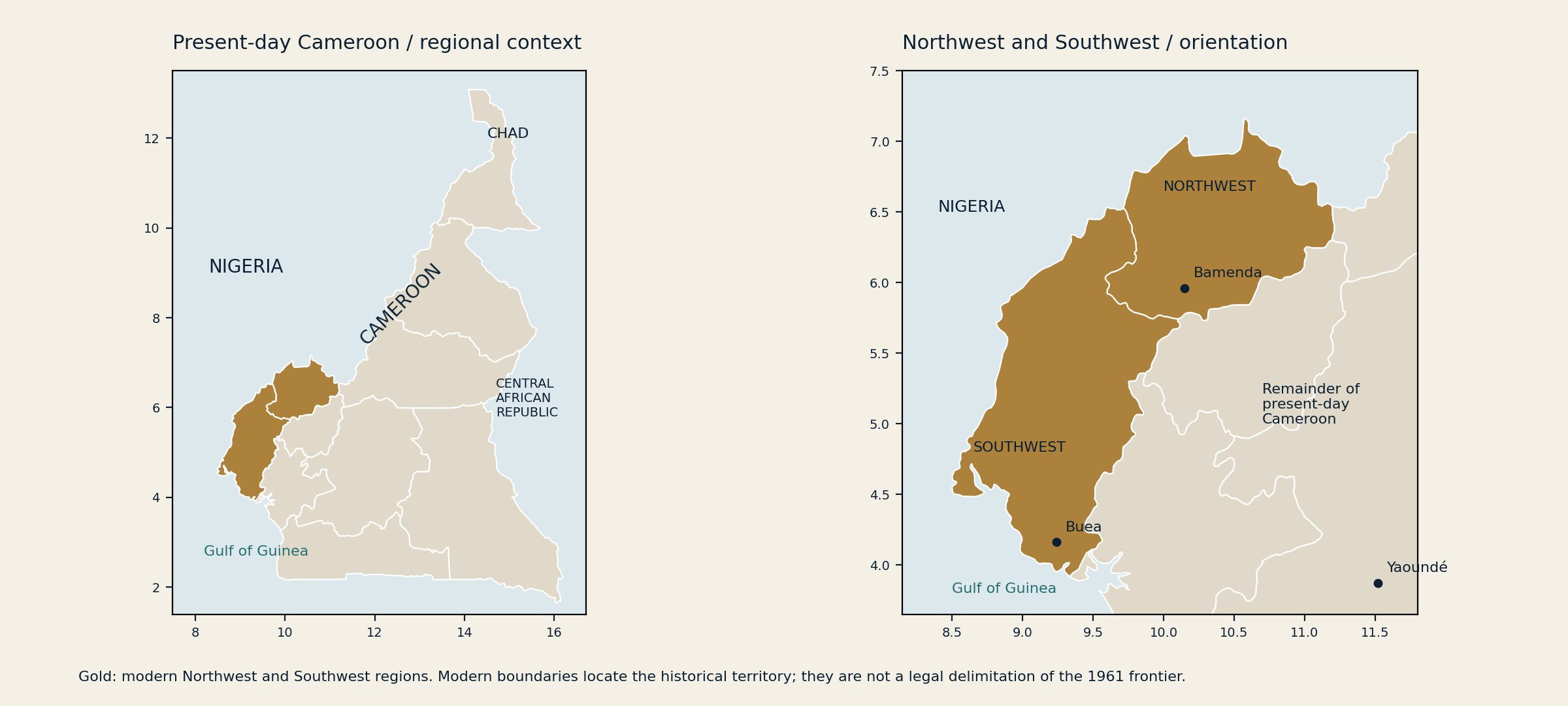
The former British Southern Cameroons lies along the Gulf of Guinea, adjoining Nigeria and the former French-administered Cameroun. The present Northwest and Southwest regions broadly locate the historical territory. Modern administrative boundaries are useful for orientation, but are not a substitute for historical boundary instruments or a legal delimitation. The map distinguishes this western area from the remainder of present-day Cameroon. [7-9]
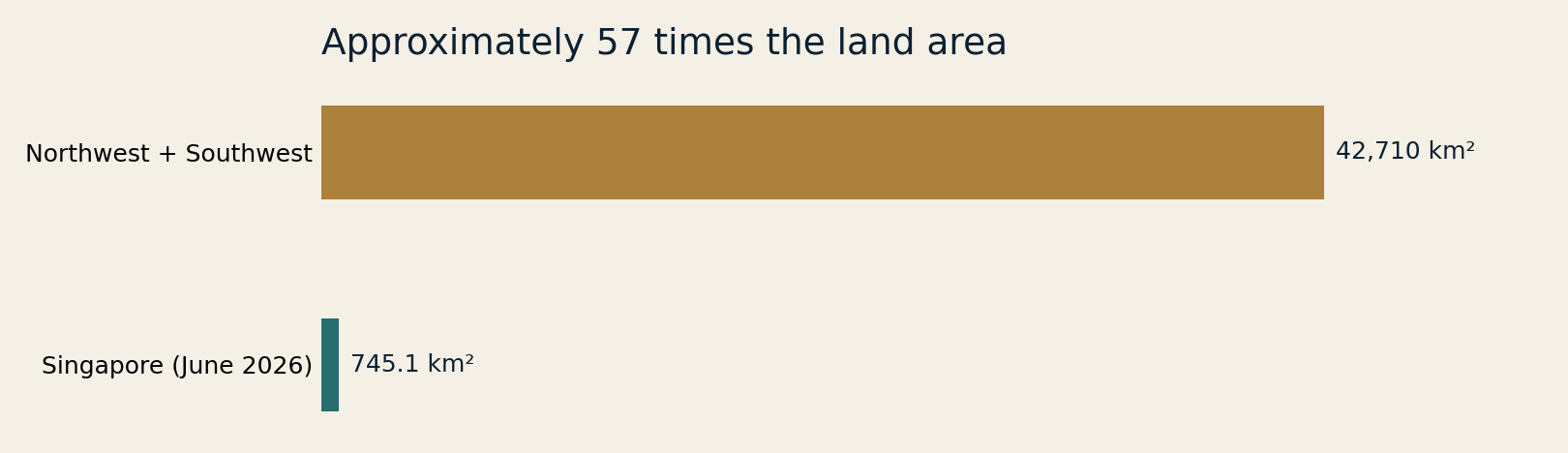
Published official areas for the two present regions are 17,300 square kilometres and 25,410 square kilometres: together approximately 42,710 square kilometres. Against Singapore's 745.1 square kilometres reported for June 2026, that is approximately 57 times the land area. This is a transparent comparison using modern regional figures, not a survey of the 1961 frontier. [7-10]
The coast, agricultural zones, highlands and proximity to Nigerian markets create possibilities for trade, farming, processing, tourism and services. These are opportunities to develop through infrastructure, skills, reliable institutions and environmental safeguards. They are not a valuation of proven mineral reserves or a guarantee of prosperity.
Population, literacy, age structure and the diaspora require a consistent statistical baseline. The suggested eight-million population, 70 percent under forty and a diaspora share are not adopted as verified statistics in this edition. A future data annex should state the year, geography, method and uncertainty of each estimate. National Cameroon figures should not be silently assigned to Southern Cameroons.
The political aspiration is more substantial than a resource inventory: freedom of worship and expression, an independent press, accountable government, secure livelihoods, education and a future in which families can live without recurring violence. These are proposed settlement objectives, not claims that every institution already meets them.
05 / 1884-1946
From German colonial rule to international trusteeship
Germany established colonial rule over Kamerun in 1884. Allied forces defeated German rule during the First World War. British and French administration followed; the League of Nations mandate system subsequently placed the respective territories under international supervision. Southern Cameroons' later institutions developed within this changed territorial and administrative setting. [1,11]
The arrangements were colonial institutions imposed upon diverse existing societies. They should not erase the history of the communities, customary authorities, languages and political life that preceded European administration. Nor should the German colonial boundary be treated as proof that all later political questions have one inevitable answer.
The UN trusteeship agreement for the Cameroons under British administration was approved on 13 December 1946. It covered the British-administered territory, including its northern and southern parts. Administration through Nigeria did not extinguish the territory's separate international trusteeship record. [1,11]
Under Article 76(b) of the UN Charter, the system's objectives included political, economic, social and educational advancement and progressive development toward self-government or independence, taking account of the circumstances and the freely expressed wishes of the peoples concerned. The administering authority exercised powers within that international framework. [12]
This distinction matters today: the historical inquiry concerns the use and completion of an internationally supervised process. It requires the trusteeship agreement, UN decisions, constitutional instruments and the evidence of implementation to be read as one sequence.
06 / 1953-1960
Self-government developed in stages
- 1953-54Separate institutional base
- 1958Ministerial reforms
- 1959Electoral change of government
- 1960Separate constitutional order
The constitutional changes associated with the 1953-1954 conferences gave Southern Cameroons a separate legislative and executive institutional base within the British Nigerian framework. Its House of Assembly and ministerial system developed through subsequent reforms. This was substantial autonomy, but should not be described as complete sovereign independence from 1953. [13-15]
In March 1958, the British government announced further constitutional advances. The ministerial arrangements agreed at the 1957 London conference came into force on 15 May 1958. E. M. L. Endeley and, following the 1959 electoral change, John Ngu Foncha belong in this institutional chronology. A representative assembly, a premier and government departments existed before the 1961 transition. [13-15]
The Southern Cameroons (Constitution) Order in Council 1960 provides a concrete record of these institutions. A separate constitutional order took effect in the context of Nigeria's independence. It is therefore misleading to discuss the territory merely as a present-day language minority without explaining its prior government and constitutional development. [15]
Common-law courts and English-language education formed part of the institutional inheritance, alongside customary law, local government and traditional authorities. These institutions evolved; they were neither culturally uniform nor free of colonial limitations. Their continuity helps explain why changes in courts and schools later became politically consequential.
Northern Cameroons followed a different administrative trajectory within Northern Nigeria. That difference helps explain why participants in the UN discussions considered the southern transition more complex. It does not mean that Northern Cameroons lacked a separate trusteeship status or that its people had no political agency. [3,16]
07 / 1959-February 1961
What choice did the plebiscite record?
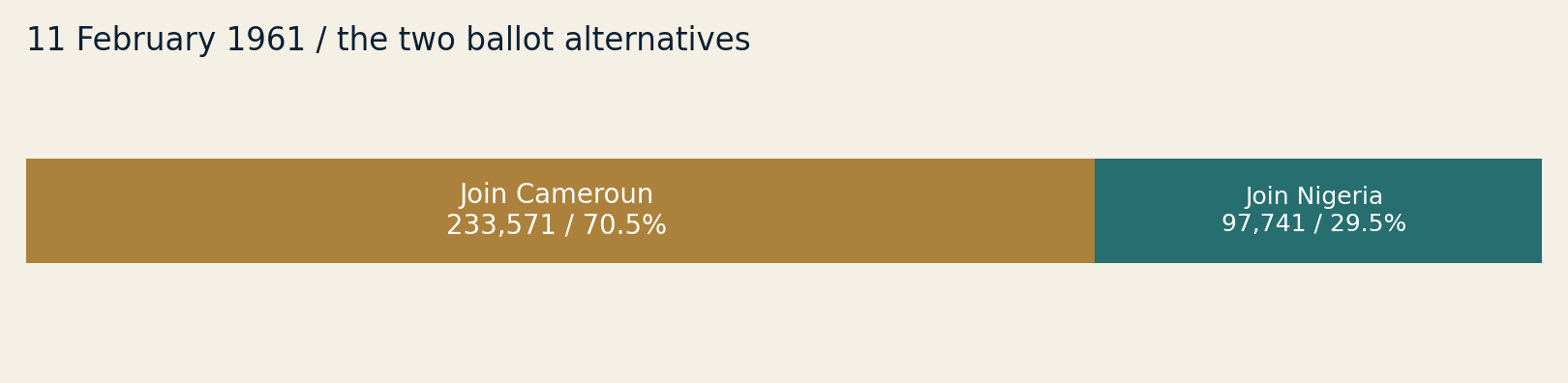
Resolution 1352 (XIV), adopted on 16 October 1959, prescribed the two alternatives for the Southern Cameroons plebiscite: achieving independence by joining the independent Federation of Nigeria, or by joining the independent Republic of Cameroun. Separate independence was not offered as a third ballot option. The same resolution recommended separation of the southern administration from Nigeria's by 1 October 1960. [2]
Resolutions 1514 (XV) and 1541 (XV), adopted in December 1960, belong to the wider decolonization framework. Resolution 1541 addresses obligations under Article 73(e) and describes independence, free association and integration as ways to attain full self-government. Its principles on informed choice and equality provide context; the specific Southern Cameroons decisions and trusteeship instruments must also be examined. [17,18]
On 11 February 1961, Southern Cameroons voters selected joining the Republic of Cameroun. The reported totals were 233,571 for Cameroun and 97,741 for Nigeria, approximately 70.5 and 29.5 percent of votes for the two alternatives. The UN endorsed the result. [4,16]
The vote was a consequential public decision. It was not itself a detailed federal constitution, a list of governmental powers or a record of approval of a final constitutional text. Asking how the choice was implemented respects the result while examining the next stage of the process.
The relevant inquiry is therefore precise: which terms were explained before the vote, which arrangements were subsequently negotiated, who approved their final form, and through which instruments did they take effect?
08 / 19-20 April 1961
Time, expertise and the objections in the UN record
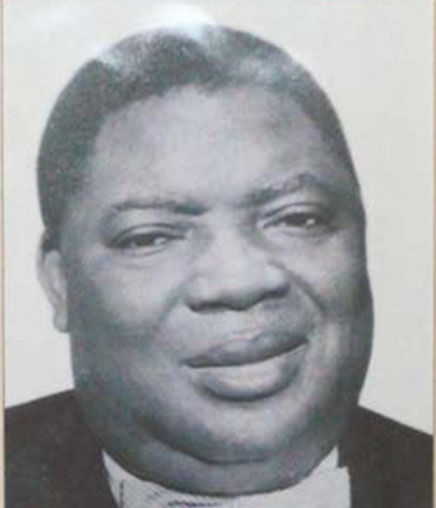
The Fourth Committee's 1152nd meeting on 19 April 1961 records disagreement over the termination dates and the proposed assistance. India's representative, M. K. Rasgotra, explained that Southern Cameroons' proposed union required attention to practical constitutional and administrative questions. He reported Foncha's request for postponement until 1 December; India had insisted on 1 October. Ghana had suggested 1 November. [3, paras. 77-78]
Charles Okala, representing Cameroun, challenged the different treatment of the northern and southern parts. He argued that the trusteeship agreement was indivisible and questioned the objectivity of providing special precautions for Southern Cameroons while Northern Cameroons received no comparable provision. His objection must be presented in that context, rather than reduced to an unexplained rejection of help. [3, paras. 68-70, 86]
Madagascar's representative questioned why experts should be sent after the joining vote, challenged reliance on private agreements and expressed concern that provisions discriminated against Cameroun. India replied that the proposed body would provide constitutional and administrative assistance at the parties' request, rather than act as a political commission reporting on them. [3, paras. 78, 83-84]
The Committee approved the expert provision, as revised to require a request from the parties concerned, by 48 votes to none, with 17 abstentions. The Secretary-General's financial note, A/C.5/866 of 20 April, estimated additional expenditure of approximately US$46,000. This was a proposed UN expenditure for the commission, not a development grant paid to Southern Cameroons. [3, para. 113; 19]
The final Resolution 1608 does not contain that expert-commission provision. The proposal's adoption in committee must therefore be distinguished from the final plenary text. The records of both stages are linked in the source dossier. [4,5]
A proposal, a committee vote and a final resolution are distinct stages of the record.
09 / The proposed expert commission / April 1961
Implementation was practical work
The proposed US$46,000 expenditure was associated with an expert commission intended to assist with constitutional and administrative questions at the request of the parties. It is evidence that the period after the plebiscite involved practical work requiring expertise, time and resources. It was not a development grant or an established first instalment of a wider programme. [3,19]
For an illustrative present-day comparison, US$46,000 in 1961 corresponds to approximately US$518,000 in September 2026 purchasing power. The calculation uses the 1961 annual average CPI-U of 29.9 and September 2026 all-items CPI-U of 336.940: 46,000 × 336.940 ÷ 29.9 = 518,369, rounded. This compares US consumer purchasing power, not the precise cost of employing a comparable UN team today. [51,52]
The distinction between planning and implementation remains essential. The final resolution omitted the expert-commission provision. An estimated cost does not prove that the commission was deployed or the money spent. What the proposal demonstrates is recognition, during deliberations, that choosing a relationship and putting workable arrangements into effect were separate tasks. [3-5,19]
US$46,000 proposed in 1961 ≈ US$518,000 in September 2026 purchasing power.
10 / 21 April 1961
The decision and the work to be completed
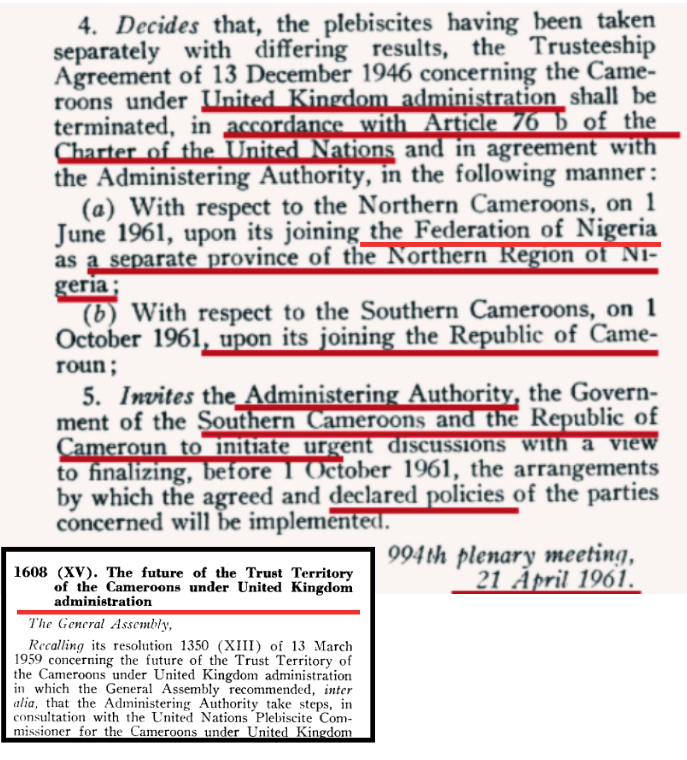
Resolution 1608 (XV) endorsed the plebiscite results and called for their implementation. Paragraph 4 set out separate termination arrangements for the two parts of the trust territory. Paragraph 5 identified three participants for urgent discussions: Britain as administering authority, the Southern Cameroons government and the Republic of Cameroun. [4]
Paragraph 4(a): 'With respect to the Northern Cameroons, on 1 June 1961, upon its joining the Federation of Nigeria as a separate province of the Northern Region of Nigeria;'.
Paragraph 4(b): 'With respect to the Southern Cameroons, on 1 October 1961, upon its joining the Republic of Cameroun;'.
Paragraph 5: 'Invites the Administering Authority, the Government of the Southern Cameroons and the Republic of Cameroun to initiate urgent discussions with a view to finalizing, before 1 October 1961, the arrangements by which the agreed and declared policies of the parties concerned will be implemented.' [4]
The resolution was adopted by 64 votes to 23, with 10 abstentions: 97 participants in the recorded vote. The figure 87 counts affirmative and negative votes only; it is not an attendance total. The voting record also lists two non-voting members. The Republic of Cameroun voted against. Its negative vote did not prevent adoption, and does not by itself establish its position on each operative paragraph. [5]
Paragraph 5 directs attention to implementation but does not expressly require a document entitled 'Union Treaty' or prescribe a particular ratification ceremony. The legal analysis must establish what arrangements were required, what instruments accomplished them and how the parties' consent was expressed. The reasons advanced for amendments and deletions should be traced in A/PV.994, rather than inferred from the final vote. [4,5]
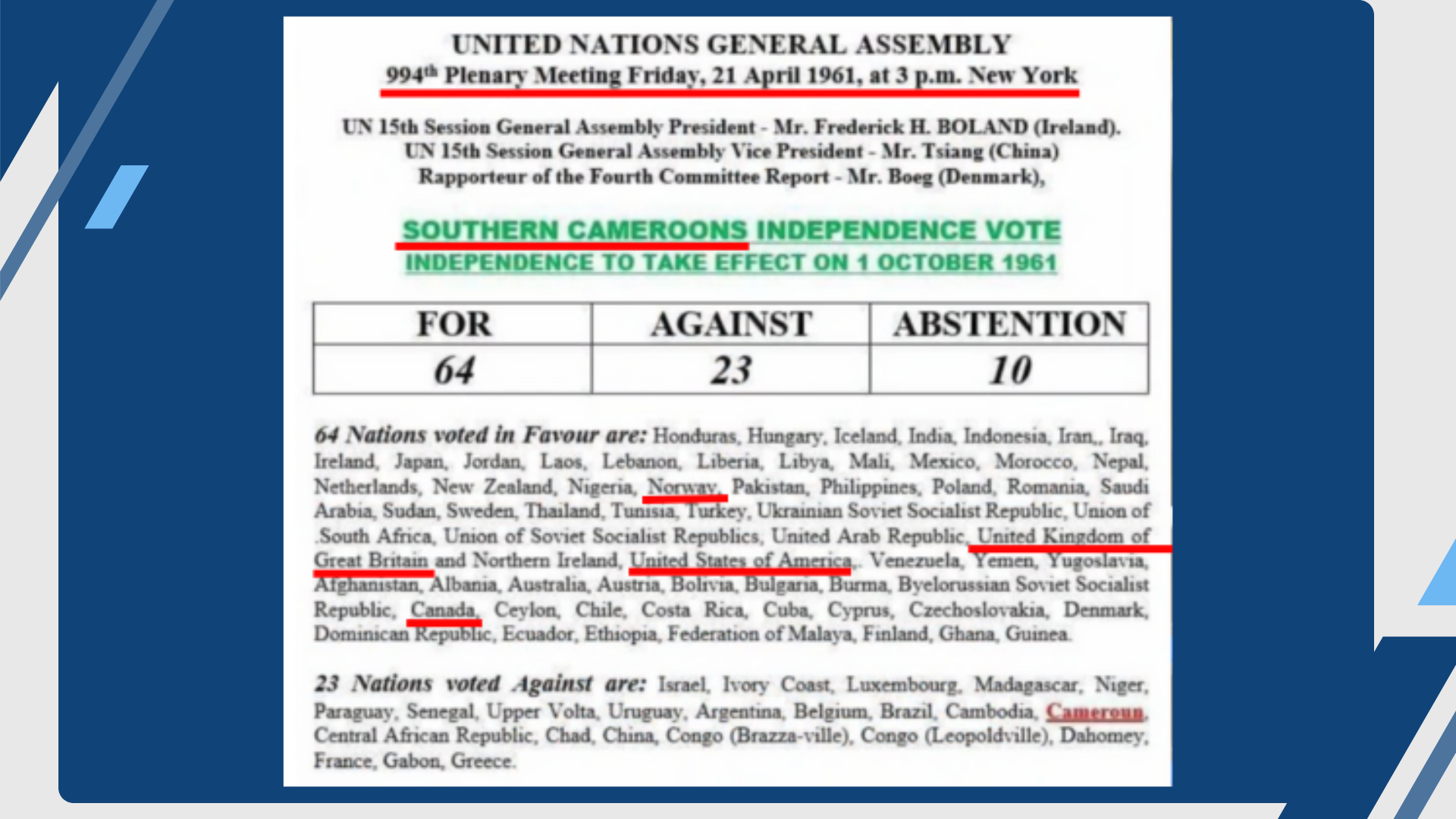
Read the full resolution on the UN website ↗ · Download the complete original resolution (local copy) ↓
11 / July-August 1961
Foumban and the warning before October
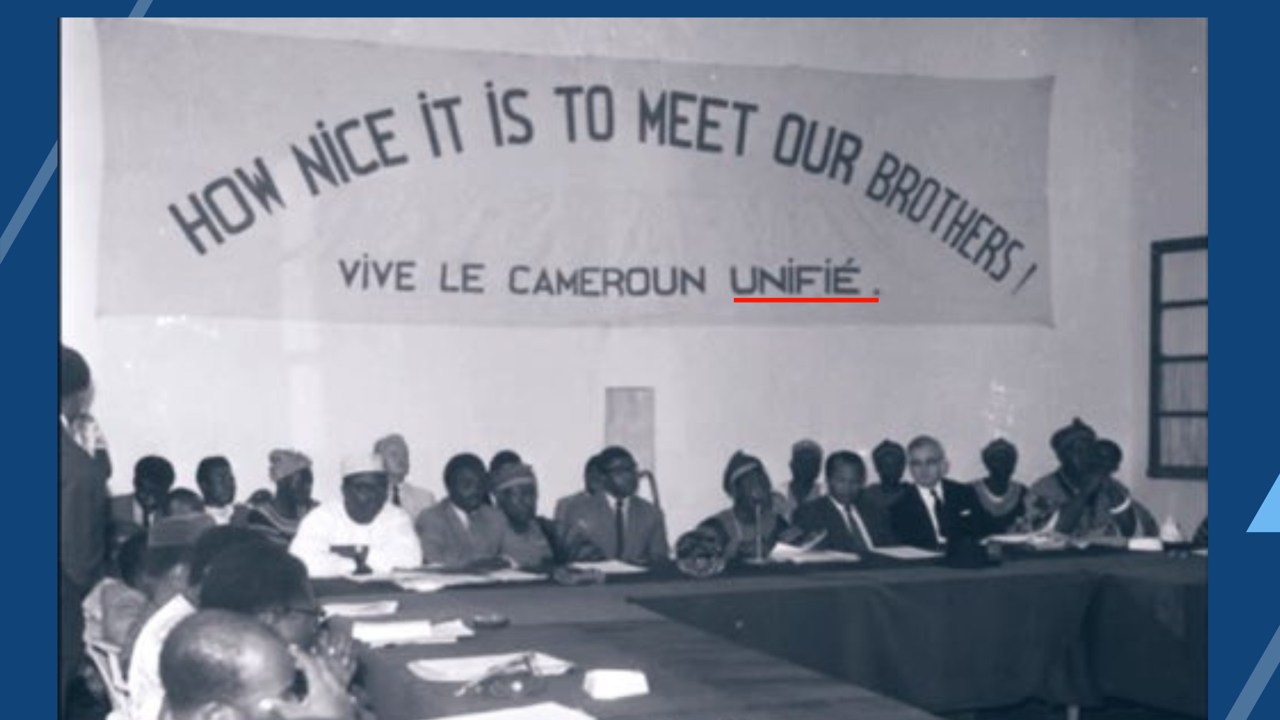
Foumban brought Southern Cameroons and Republic of Cameroun representatives together in July 1961 to discuss a federal constitutional arrangement. It was one stage in the process. A conference photograph, a draft and the constitution ultimately enacted are different kinds of evidence. The essential task is to trace the proposed terms, the amendments, subsequent talks and the approvals. [6,16]
On 1 August 1961, beginning at 1:21 a.m., George Morgan Thomson raised Southern Cameroons in the House of Commons. His concern was the short time remaining, the clarity of the proposed federation, continuity of administration and security. He sought a 'firm agreement in black and white'. [16, col. 1338]
His statement that no serious work had been done was expressly qualified by 'So far as I can discover'. He also reported a slogan about seizing Southern Cameroons and asked whether it was official. Those passages document a parliamentarian's warning and questions; they do not independently establish that the reported slogan was government policy. [16, cols. 1335-1338]
Thomson relayed a newspaper account attributing three requests for British troops to Foncha and asked the minister to confirm it. That should not be rewritten as three documented personal appeals by Foncha to Parliament. The debate records a reported request and a demand for clarification. [16, col. 1340]
The minister, Hugh Fraser, defended the plebiscite and Britain's timetable, discussed arrangements for the transition and explained the government's position on troops and future administration. The complete debate must accompany the selected quotations. Parliamentary concern is evidence that the questions were contemporary, not a substitute for the instruments subsequently adopted. [16]
12 / September-October 1961
Follow the instruments and the evidence of consent
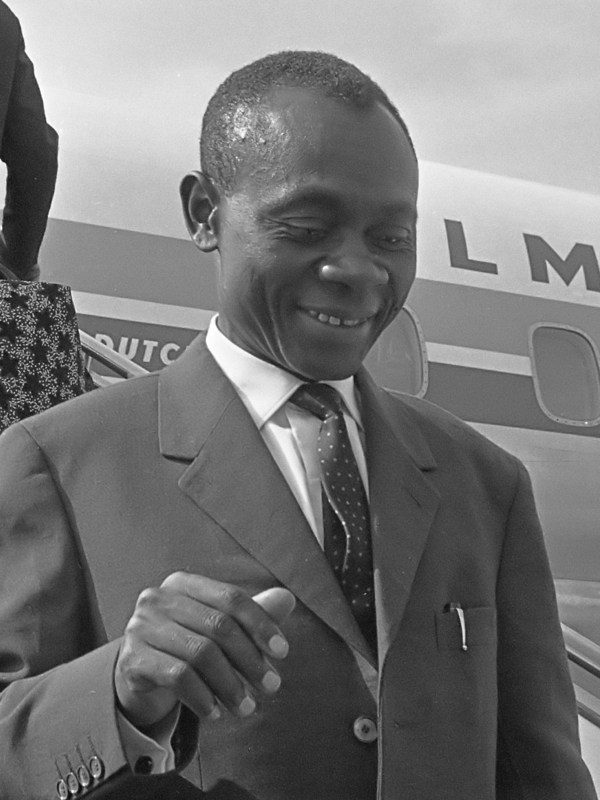
Southern Cameroons premier
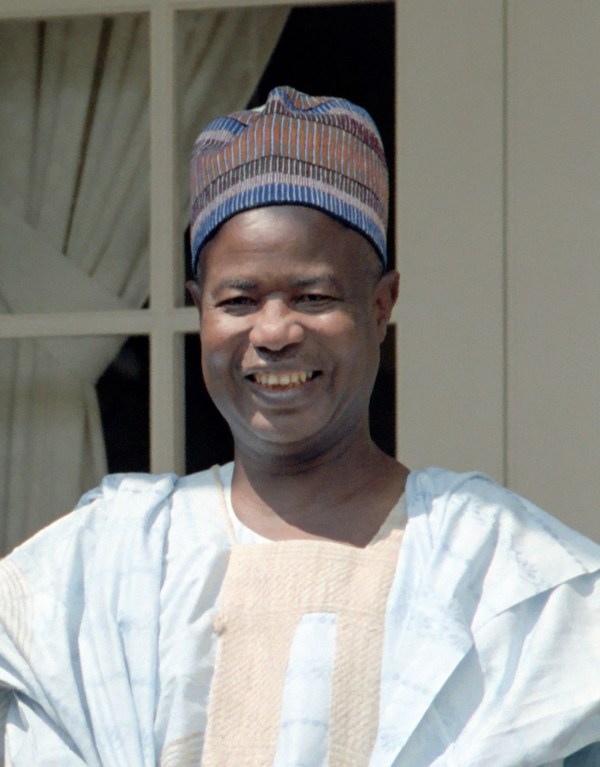
President of the Republic of Cameroun
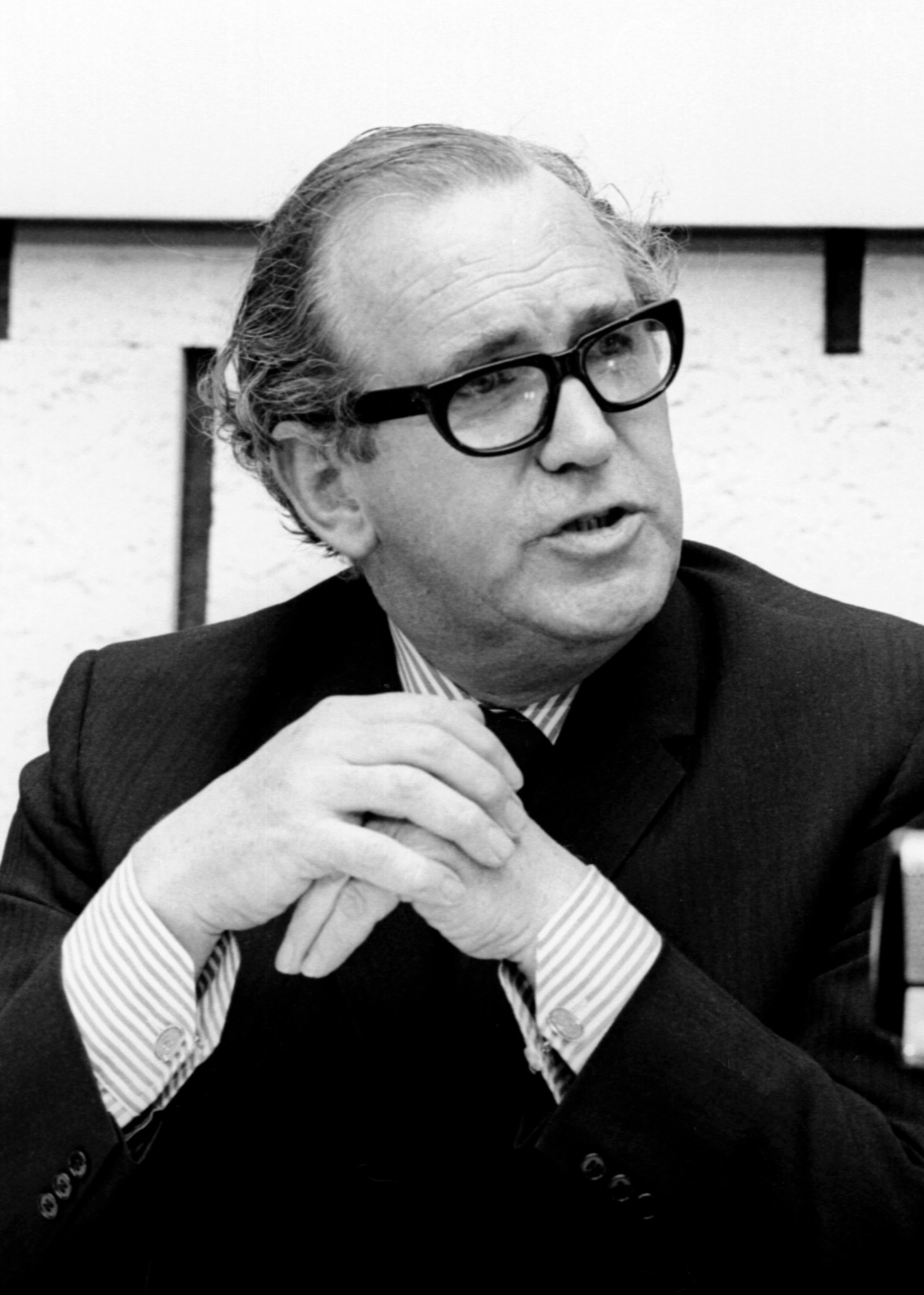
British MP raising the transition questions
The final federal constitution was promulgated in September and took effect on 1 October 1961. Its Article 59 described revision of the Republic of Cameroon's 1960 constitution. Articles 53 and 56 provided for the transformation of the existing assemblies and governments into those of East and West Cameroon. These provisions are evidence of the constitutional structure put into operation. [6]
They do not, by themselves, answer every question about the adoption procedure or Southern Cameroons' consent to the final terms. That inquiry requires the original gazette, Southern Cameroons legislative proceedings, conference records, correspondence and the powers under which representatives acted. A draft discussed at Foumban must not be silently substituted for the enacted text, or the enacted text treated as proof of a particular approval process without examining that process.
A 2018 English High Court judgment, Lysongo v Foreign and Commonwealth Office, records an exchange of notes between the British ambassador and President Ahidjo in September 1961 concerning federal assurances. It is a relevant lead for the documentary inquiry. The judgment dismissed the claim before it; it was not a comprehensive adjudication of every question posed in this briefing. [20]
An exchange of notes can constitute an international agreement. Its title alone does not determine its legal effect. The questions are what obligations the notes created, whose consent they expressed, whether they addressed the required arrangements and what approvals were legally necessary. A British-Cameroun exchange should be assessed for its actual scope, including its relationship to Southern Cameroons' own authorization.
Article 102 of the UN Charter concerns registration, publication and invocation before UN organs. Nonregistration does not automatically invalidate an agreement. Nor does an unsuccessful search prove nonexistence. This briefing has not established a complete, independently verified chain of Southern Cameroons' approval; it calls for publication and legal evaluation of that chain. [21]
Name the instrument. Identify the parties. Establish the authority. Trace approval and implementation.
Video supplement / A participant’s retrospective account
Foncha’s retrospective account: constitutional work he considered unfinished
Edited excerpt supplied by Roland Fru. Recording date and venue remain unverified.
In this edited excerpt, John Ngu Foncha looks back on the constitutional discussions preceding the federation. He recalls an anticipated return to the discussions in August, his efforts to remind Ahmadou Ahidjo about the constitution, and the absence of a response in September. He then contends that Ahidjo used the draft to declare federation and unification on 1 October, although, in Foncha’s account, the work remained unfinished and required the parties to return to it.
The distinction matters: Foncha was speaking retrospectively, after serving in the government whose formation he was describing. He had been premier of Southern Cameroons during the 1961 negotiations and subsequently served as federal vice-president. His account therefore brings a participant’s recollection into the inquiry into what was discussed, what remained outstanding and how the final constitutional arrangements were authorized.
The central question raised by his account is how a negotiating draft became an operative constitutional settlement, and through what documented process Southern Cameroons approved the final text. The promulgated 1961 constitution is linked in this briefing. Its existence and Foncha’s criticism should be examined together with the conference records, any agreed changes, legislative proceedings and other evidence of approval. A participant’s later testimony is relevant evidence; establishing the legal consequences requires that documentary chain. [6]
Source note: edited video supplied by Roland Fru, approximately 58 seconds, with added subtitles, identifying captions and a book-launch closing card. The original speech’s date, venue and full recording have not been independently established for this edition. The author identifies it as approximately 1995. The on-screen subtitles are part of the supplied edit and are not presented here as an independently verified verbatim transcript.
13 / 30 May 1961-2 December 1963
What the Northern Cameroons case did—and did not—decide
On 30 May 1961, the Republic of Cameroon instituted proceedings against the United Kingdom before the International Court of Justice concerning Northern Cameroons. The claim challenged Britain's performance of trusteeship obligations in that northern territory. It was not a lawsuit seeking a judgment on the validity of Southern Cameroons' federal constitutional arrangement. [22]
The application preceded the 1 June termination date for Northern Cameroons. The Court delivered its judgment on 2 December 1963. In the circumstances, it declined to adjudicate the merits because a judgment would have no practical purpose within the Court's judicial function. The phrase 'without object' must be read in the reasoning and procedural context of that judgment. [22]
The decision neither restored trusteeship nor decided that Southern Cameroons' relationship with the Republic of Cameroon was valid or invalid. It therefore cannot be used as a shortcut around the separate documentary inquiry into the southern transition.
The litigation nonetheless matters historically. It shows that Cameroun itself contested aspects of Britain's administration and the northern plebiscite process. The northern and southern outcomes had different administrative settings, different implementation dates and different legal questions. A careful narrative keeps those differences visible.
The chronology now returns to the federation established in 1961 and the subsequent changes to its institutions.
14 / Federal safeguards and later changes
1972 and 1984 require separate legal analysis
Article 47 of the 1961 constitution stated: 'Any proposal for the revision of the present Constitution which impairs the unity and integrity of the Federation shall be inadmissible.' The word Federation is central to the author's question. The article also prescribed an amendment process including a majority of the federal representatives from each federated state. [6, Article 47]
In May 1972, a referendum approved replacement of the federal structure by a unitary state; the new constitution followed in June. The critical legal question is how that replacement was reconciled with Article 47's restriction and the constitutional procedures then applicable. A full opinion should examine arguments about referendum authority and constituent power, as well as the objection that the federation could not lawfully be abolished through ordinary revision. [6,23]
Other provisions deserve examination: Article 38 on powers reserved to the states; Article 46 on continuity of existing legislation; Articles 53 and 56 on existing assemblies and governments; and Article 50's limited transitional ordinance power. Any alleged breach must identify a specific act, its date, the applicable constitutional version and the evidence. [6]
In 1984, Law No. 84/1 of 4 February changed the name from United Republic of Cameroon to Republic of Cameroon. Calling it only a presidential decree obscures the instrument's formal designation. The name change came after the federal structure had already been removed. [24]
Some advocates interpret the return to the earlier name as dissolution or withdrawal from the union. That conclusion does not follow automatically from the name change. It requires a distinct argument about state continuity, constitutional authority and the original relationship. A political name, by itself, cannot substitute for that analysis.
Even if one accepts the 1961 constitution as the governing starting point, the legality of later changes remains a question requiring examination. Conversely, criticism of later changes does not by itself prove the original arrangement invalid.
Read the restriction, the procedure and the later act together.
15 / Reported presentation / 20 May 2010
Historical maps and the meaning of a presentation
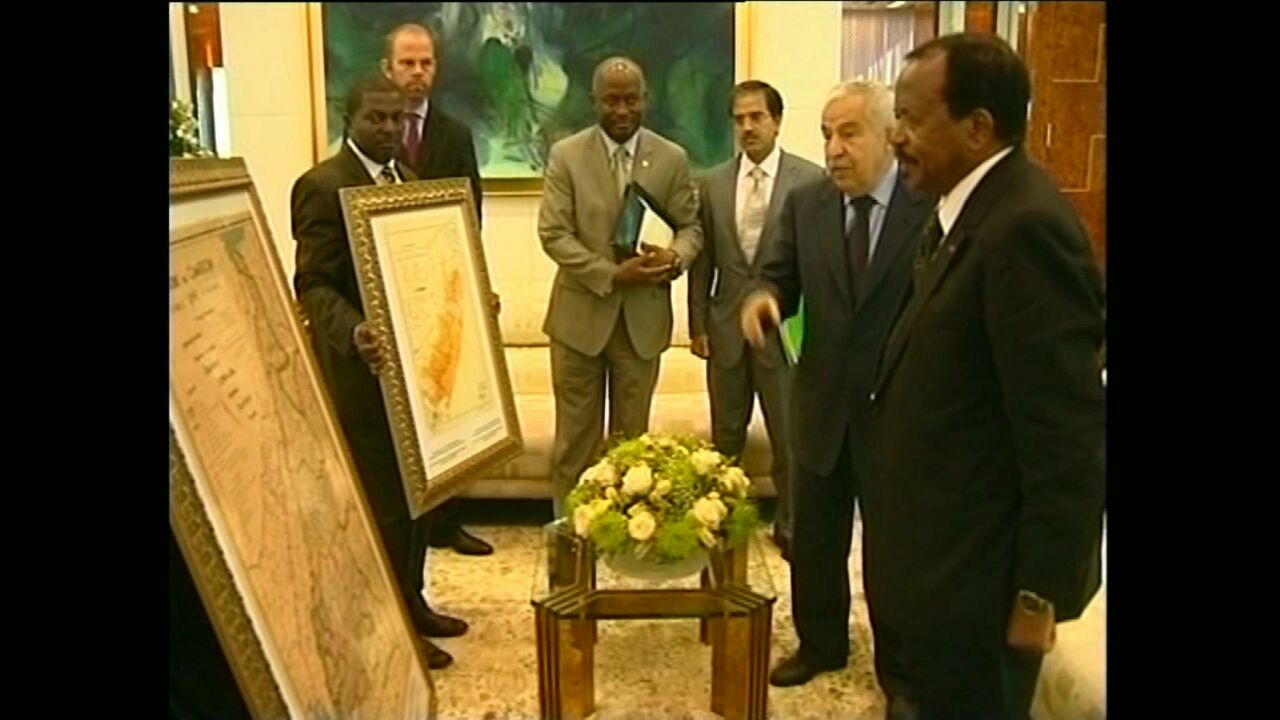
The supplied photograph shows a presentation involving two framed maps and President Paul Biya. A published account dates the presentation to 20 May 2010 and identifies the presenting official as Ali Abdussalam Treki. The UN confirms that Treki presided over the General Assembly’s 64th session, from September 2009 to September 2010. The event is therefore reported as involving the Assembly President, rather than António Guterres. [53,54]
The map titles, dates and original cartographic records should be examined directly. This edition has not located an original UN caption or complete presentation transcript establishing the intended significance of the gift. The photograph is historical context, not evidence of a UN adjudication of sovereignty or the legal validity of the 1961 arrangements.
The broader point does not depend on interpreting a ceremonial gesture: Southern Cameroons has its own mandate and trusteeship record. That documented international history is the basis for examining the transition, the implementing instruments and the evidence of consent. [1,4,11]
16 / Eritrea, Belgium and other cases
Compare processes, without collapsing different histories
Eritrea and Ethiopia offer a useful documentary comparison. Resolution 390 A (V) of 2 December 1950 set out the proposed federation. The UN Commissioner's final report, A/2188, contains the Eritrean constitution, the Federal Act and the associated approval and ratification records. In 1952, those instruments gave the arrangement an identifiable documentary sequence. [25,26]
That federation was subsequently dismantled in 1962, followed by a long war and Eritrea's 1993 independence referendum. Its lesson is twofold: the formation of a relationship can be documented, and formal instruments alone do not ensure that safeguards endure. This is a comparison of documentary method and institutional durability, not proof that identical ratification requirements governed Southern Cameroons. [26,27]
Belgium's 541-day government formation after the June 2010 election illustrates the time that complex political bargaining can require. It was not 541 days spent drafting the country's founding constitution or negotiating a new international union. The responsible comparison concerns patience, negotiated compromise and institutional continuity. [28]
Biafra arose from a secession declaration within independent Nigeria in 1967. South Sudan's 2011 independence followed the 2005 Comprehensive Peace Agreement and a referendum. Neither is interchangeable with Southern Cameroons' UN-supervised trusteeship transition in 1961. Their evidence, applicable instruments and political circumstances must be examined separately. [29,30]
Comparative research should ask the same disciplined questions of every case: what was the territory's status, what instrument authorized the transition, how was consent established, and how were the terms implemented? An assertion that no comparable union ever existed would require a much broader historical survey than this briefing supplies.
17 / 2016-2017
Why lawyers and teachers brought institutions into the streets
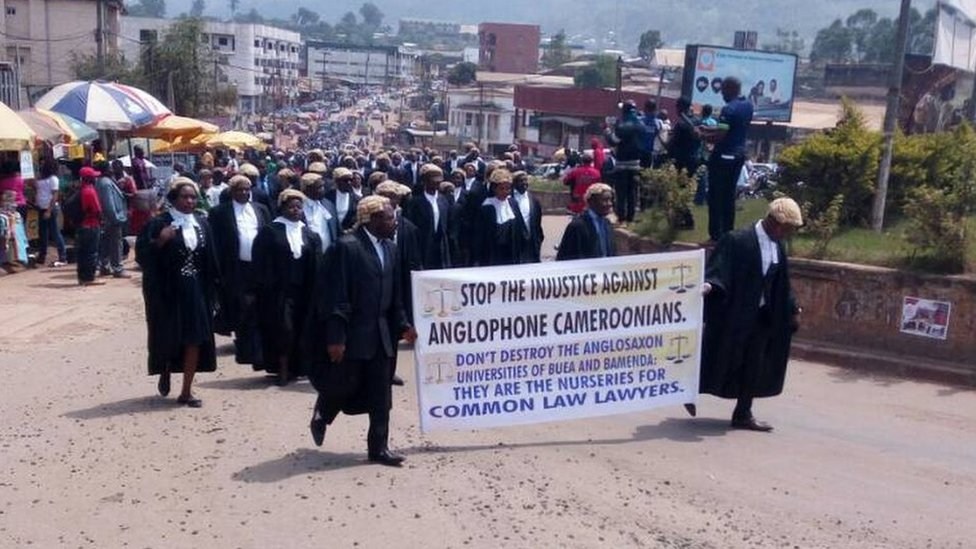
The protests that began in 2016 involved concerns about the operation of common-law courts and the English-language educational system. Lawyers and teachers challenged practices they viewed as undermining institutions inherited from the territory's distinct administrative history. The issue was not simply the nationality or ethnicity of an individual teacher or judge; language competence, legal training, institutional rules and effective access to justice were central. [31,32]
The response included arrests and restrictions, and the crisis escalated into armed conflict. Human-rights investigations have documented grave abuses by security forces and armed separatists. The historical account must distinguish peaceful protesters, political advocates, civilians and armed actors rather than assign them one collective identity. [31,32]
The protests make the institutional chronology relevant to present life. Courts and schools are places where people experience the state: whether they can understand proceedings, obtain a fair hearing, educate their children and participate on equal terms. Constitutional design becomes tangible through these everyday institutions.
The term Ambazonia is used by movements seeking a separate state. It should not erase the earlier historical name Southern Cameroons or be treated as synonymous with every person from the territory. Nor should any movement's interpretation of 1984 be presented as a settled legal judgment.
The purpose of recounting this history is to explain the dispute and identify responsibilities. It is also to articulate a future in which institutional continuity, equal rights and peaceful political choice can be secured.
18 / Protection and accountability
The human cost and the limits of a security response
Arbitrary detention, unlawful killings, torture and unfair trials belong in this account because they affect people and the conditions for a credible settlement. Amnesty International has documented terrorism-related proceedings against civilians and reported violations by security forces, militias and armed separatists. Responsibility must be established incident by incident; no political objective excuses attacks on civilians. [32,33]
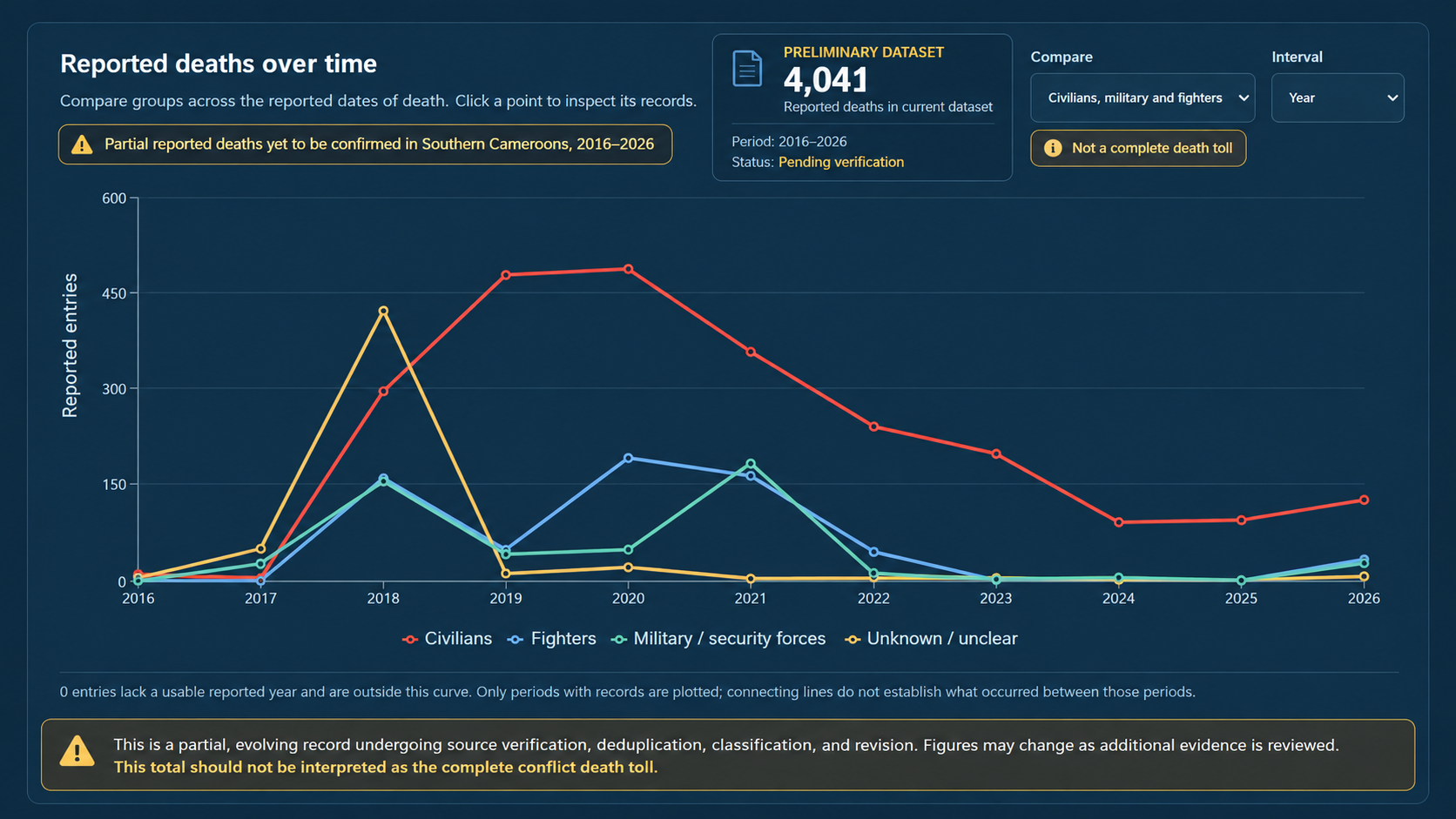
The scale of harm should be stated with dates and methods. Canada's January 2023 statement cited more than 6,000 deaths since 2017 and nearly 800,000 displaced people. These are attributed historical estimates, not independently verified October 2026 totals. They should not be added to a partial casualty list or treated as a count of a single perpetrator's victims. [34]
SC Clarity's Human Cost page links to a 2016-2026 partial list of reported deaths and its organizers' explanation of scope and method. A partial named record, an estimated total, internal displacement and refugee registration are different measures. Each should retain its own date, source and limitations. [35]
Decree No. 2018/719 of 30 November 2018 established the National Disarmament, Demobilization and Reintegration Committee. Its remit covers former Boko Haram fighters and members of armed groups in the Northwest and Southwest willing to lay down their arms. This common programme does not itself establish a numbered hierarchy of terrorist categories or classify the territory's population as terrorists. [36]
DDR may help people leave armed groups and return to civilian life. It does not by itself resolve a historical or constitutional dispute. The parallel political questions remain: what is the subject of negotiation, who can participate, what authority do they carry and how will the resulting terms receive public approval?
The DDR committee was established in November 2018, after the crisis began; it has not existed for the entire decade since the 2016 protests. Reintegration can assist people leaving armed groups, but cannot determine the historical legal question. Allegations of unlawful killings, arbitrary detention or misuse of terrorism charges require evidence and accountability in each case. A terrorism label cannot substitute for proof, due process or civilian protection. [31-33,36]
Civilian protection must proceed now. Political arrangements must be examined and negotiated with a defined mandate.
19 / Responsibility, not victimhood
Making migration a choice, not an escape
We are not advancing a politics of victimhood. We want to study the evidence, take responsibility and build a durable future for our people. Documenting suffering is not a request for permanent dependency. It is a reason to protect life, restore accountable institutions and enable people to work, create businesses and contribute to their communities.
A Southern Cameroonian now in Russia recently contacted me. He told me that the crisis had taken both his parents and three siblings, leaving him and one sibling alive. This is personal testimony reported to me, not an independently verified casualty record. His identity is withheld. His account raises a human question: what conditions make someone seek safety so far from home? It does not establish that Russia is generally safer, or describe his immigration status.
Displacement is measurable, but the categories matter. Canada's January 2023 statement cited nearly 800,000 displaced people in the conflict; that remains a dated estimate, not a current total. UNHCR's Nigeria dashboard for 1 October 2026 records 120,972 people from Cameroon: 107,929 refugees, 39 asylum-seekers and 13,004 awaiting registration. It includes origins in the Northwest, Southwest and Extreme North. It is therefore not a count of Southern Cameroonian refugees alone, nor a count of the worldwide diaspora. These figures should not be added together. [34,57]
A durable settlement could reduce conflict-driven flight and make staying home a viable choice. Safe communities, functioning schools, reliable courts, secure property rights and productive employment would also support voluntary return when people consider it safe. Return must be informed and free of coercion; people unable to return still need protection. Peace would not end every form of migration, which also reflects education, family, work and other choices.
Our objective is not to keep people dependent on emergency assistance. It is to make their abilities productive: at home, through lawful mobility and through diaspora investment and knowledge. International partnership should help remove barriers to that responsibility, not replace it.
We are not looking for handouts. We want to build, develop and empower our people.
20 / Read the figures in context
Aid is a bridge, not a development model
Humanitarian protection and long-term self-reliance are complementary, not opposites. Emergency help can save lives while people rebuild the capacity to earn, learn and invest. A responsible development strategy should not assume that foreign assistance will remain available at its previous level.
The OECD's preliminary release of 9 April 2026 reports the following changes in official development assistance (ODA). Every percentage below compares 2025 with 2024 in real terms, adjusted for inflation and exchange-rate movements. [58]
| Provider / measure | 2025 change vs 2024 |
|---|---|
| DAC countries and associate: total ODA | -23.1% |
| United States: total ODA | -56.9% |
| Germany: total ODA | -17.4% |
| France: total ODA | -10.9% |
| United Kingdom: total ODA | -10.8% |
Source: OECD, preliminary 2025 ODA data, 9 April 2026. Selected European donors are shown individually; they are not an aggregate for Europe. [58]
These are donor-wide figures across recipient countries and programmes, not amounts cut from Southern Cameroons. They do not demonstrate that aid reductions caused this conflict or any particular migration journey. Preliminary figures may be revised; detailed 2025 data were scheduled for December 2026. [58]
The policy implication is our own: pursue peace and capable institutions so that enterprise, trade, skills and investment can sustain development. We seek productive partnership, not permanent dependency. International attention is justified by civilian protection, the historical record and regional stability, not by an expectation that others will build our future for us.
21 / An ambition with public accountability
Vision 2045: the future we intend to build
By 2045, the ambition is a peaceful society in which young people can study, acquire useful skills, establish enterprises and plan their lives without violence forcing them to leave. People should be free to stay, return or move lawfully by choice. This is a conditional vision, not a demographic or economic forecast, and no constitutional formula alone can guarantee it.
The foundations are practical: civilian security; accountable democratic institutions; independent justice; freedom of expression, the press and worship; and rules that protect property and fair competition. Investment in education, health, energy, transport and digital infrastructure should enable private enterprise and cross-border trade. Diaspora communities can bring knowledge, professional networks and investment, without being treated merely as sources of remittances.
Progress must be measured rather than proclaimed. A publicly authorized implementation plan should establish dated baselines, budgets, responsible institutions and independently reviewable milestones. Track civilian safety, school attendance, access to justice, employment and enterprise survival, reliable essential services, and whether displaced people can make genuinely safe and voluntary choices. Disaggregate results by community, age and gender where reliable data allow; do not invent targets from unverified population estimates.
Legal clarity, negotiation, public authorization and implementation are therefore not an end in themselves. They are the means to a durable future that people can help build and hold their institutions accountable for delivering. We ask the world to examine the evidence and support a credible process. We accept the responsibility to study, work, organize and build.
The measure of success is not the strength of our grievance, but the safety, freedom and opportunity our people can exercise.
22 / April 2026
Presence, acknowledgment and the duty to engage
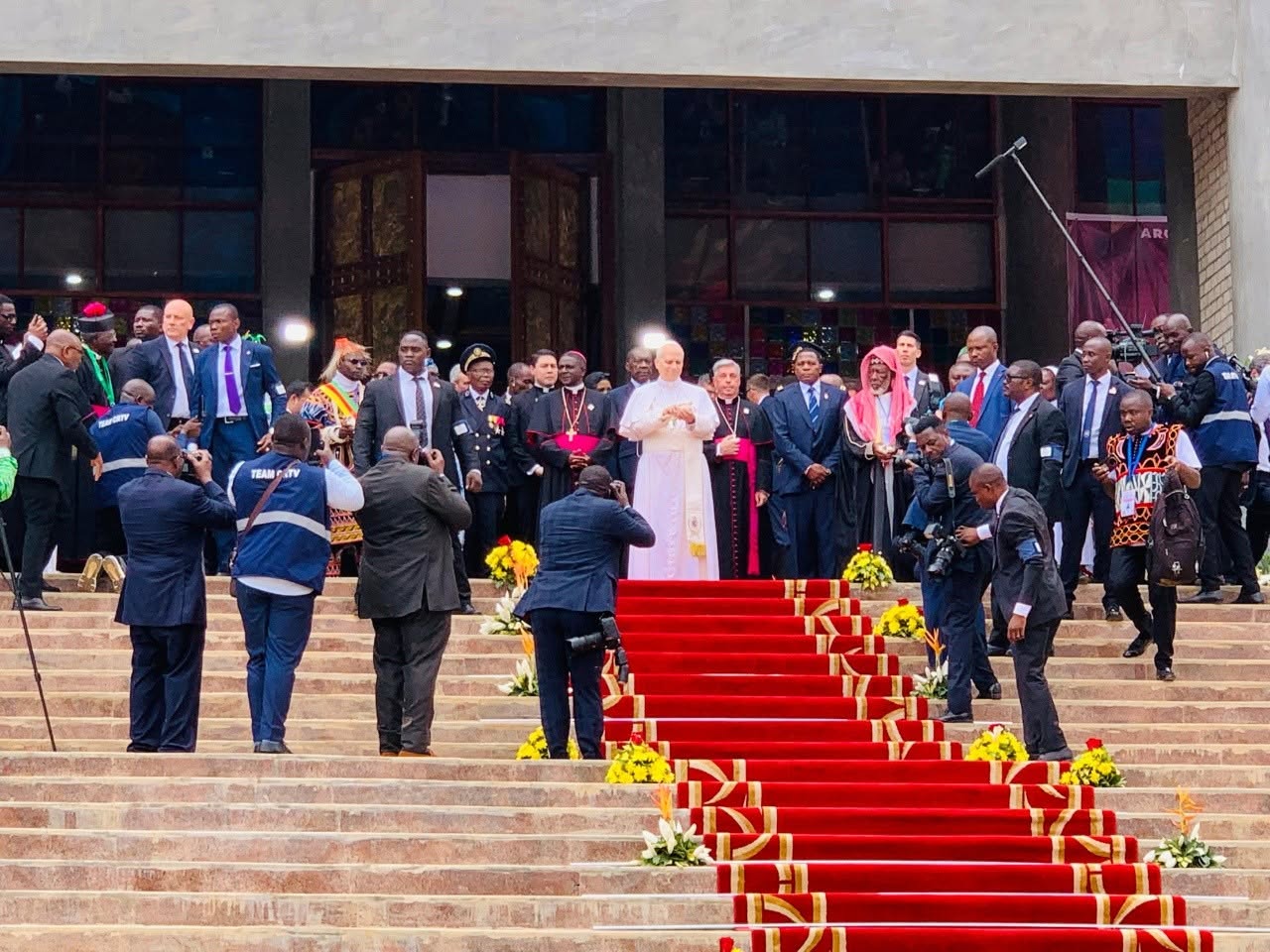
On 16 April 2026, Pope Leo XIV visited Bamenda and met community representatives at a meeting for peace. The Vatican's contemporary record identifies the date, setting and appeal to a population that had suffered greatly. A visit does not settle a constitutional question, but direct engagement can acknowledge suffering and help create space for peace. [37]
Reporting during the papal visit stated that President Paul Biya had not visited the affected region since the conflict began. This is an attributed report as of April 2026; this edition does not claim to have independently audited every presidential movement across both regions through October. His lengthy stays in Europe are separately documented. [38,39]
The accountability question is nevertheless legitimate: how do those exercising authority hear affected communities, explain policy, respond to violations and assume responsibility for a settlement? The public deserves more than ceremonial appointments or assurances that cannot be tested against outcomes.
Appointing a person from Southern Cameroons to a senior office does not automatically establish that the population has authorized that person to negotiate its political future. Appointment, electoral representation and a specific negotiating mandate are distinct forms of authority.
A credible process should include acknowledgment of harm, access to justice and sustained engagement with affected communities. The test is whether institutions enable people to question policy and influence decisions about their future.
23 / Reviewing the initiatives
Dialogue needs a subject, parties and an intended outcome
The Grand National Dialogue of 2019, Swiss facilitation and Canada's announced process should be evaluated separately. They differed in format, participants and mandate. It would be inaccurate to describe every initiative as conversation only among Southern Cameroonians, or to assert that each addressed the same legal question. [34,40,41]
The Swiss government's June 2019 announcement described facilitation at the parties' request and preparatory meetings with opposition groups. Canada's January 2023 statement named the Republic of Cameroon and several movements as parties to an agreed process and described technical committees for confidence-building. Those official announcements establish what was announced, not proof that a comprehensive settlement was implemented. [34,40]
The author's criticism is a question of design: has any process explicitly examined the 1961 implementation record, identified the dispute the parties agree to negotiate and established how affected people will authorize the result? A dialogue can discuss urgent grievances without resolving every historical issue. Its scope and limitations should be stated honestly.
Consultation within Southern Cameroons is necessary to establish priorities and mandates. Engagement within the Republic of Cameroon is also necessary to prepare its population and institutions for possible changes. Neither internal consultation substitutes for negotiations between appropriately authorized parties.
Humanitarian organizations, religious leaders, officials, armed actors and diaspora groups can contribute in different ways. Their contribution does not automatically confer authority to determine a population's political future. Mandates, financial transparency, public accountability and a willingness to consider workable settlements should be assessed through evidence.
A credible dialogue requires an agreed diagnosis, identifiable parties, a defined agenda and an intended outcome. Its procedures must connect consultation to negotiation, approval and implementation.
24 / Buea community dialogue / 28 September 2026
A crisis cannot be resolved by a forecast
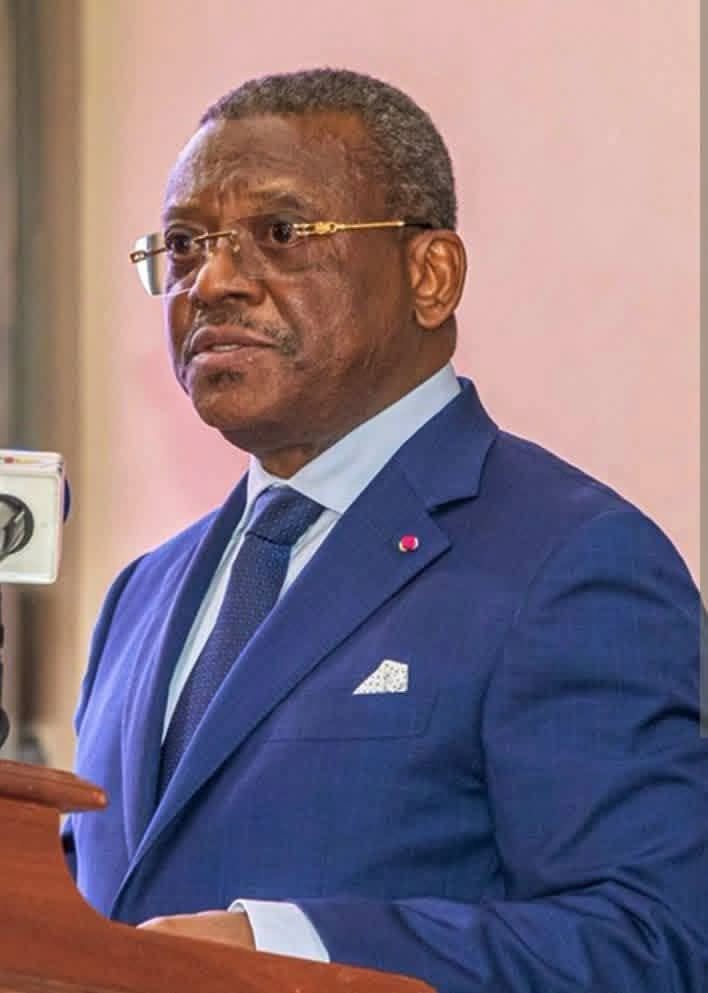
At the community dialogue in Buea on 28 September 2026, Prime Minister Joseph Dion Ngute was reported as saying that the conflict was declining and could “die a natural death” within another ten or fifteen years. The reporting also says he urged action to resolve it now and encouraged community leaders to persuade armed separatist fighters to lay down their weapons. This is an attributed account; a complete recording or official transcript has not been verified for this edition. [55,56]
That context matters. The available account does not support portraying the remark simply as an instruction to do nothing. Nor does a reported public statement establish what officials say in private. The relevant test is the adequacy of the policy: what problem is being addressed, who can negotiate it and what concrete commitments will protect people now?
The author’s assessment is that treating the conflict chiefly as a security problem that may fade through exhaustion is an inadequate diagnosis. A decline in violence does not establish resolution of disputes about institutions, rights, authority or consent. Community meetings and DDR can serve useful purposes, but neither substitutes for a negotiated settlement of those questions.
The government should publish a clear dialogue mandate: its subject, representative parties, safeguards for civilian participation, approach to detainees and accountability, timetable, implementation responsibilities and means of public authorization. International facilitation should support an agreed, peaceful process. The territory’s trusteeship history, continuing human suffering and regional consequences provide substantial reasons for international attention; they do not remove the need to establish the legal basis and terms of any particular intervention. [1,4,31-36]
The public needs a defined process and accountable action, not a forecast of exhaustion.
25 / A proposal for discussion
A practical path toward a durable settlement
- 1Legal clarity
- 2Negotiation
- 3Public authorization
- 4Implementation
1. Legal clarity. Assemble a public record of the trusteeship framework, plebiscite, UN decisions, conference proceedings, constitutional measures and implementing instruments. Commission independent legal analysis, disclose competing interpretations and identify available forums and their jurisdiction. Evidence that changes the analysis should change the position.
2. Negotiation. Agree the subject, parties, representation, timetable and intended outcomes. Examine practical options for the future relationship, including their legal requirements and consequences. Establish civilian-protection and confidence-building measures while substantive negotiations proceed. A constitutional settlement must work for affected people and be capable of implementation by the institutions concerned.
3. Public authorization. Establish a lawful, inclusive and credible approval process. Explain the proposed terms in accessible languages, protect debate, include displaced people through feasible arrangements, define the electorate and provide independent oversight. An online assessment, public meeting or donation is not a substitute for that process.
4. Implementation. Specify responsibilities, transitional arrangements, budgets, dispute resolution, monitoring and deadlines. Address security, rights, institutional continuity, reconstruction and return or durable solutions for displaced people. Publish progress so that the agreement can be assessed against delivery.
Peace in this territory also matters to Nigeria and the wider Gulf of Guinea through cross-border movement, trade and regional cooperation. Continued conflict creates risks; a durable settlement offers an opportunity for stability and development. That is a reason for sustained engagement, not a prediction that one constitutional outcome alone guarantees peace.
The future should be judged by the freedoms and capabilities people can exercise: secure lives, education, accountable government, freedom of worship and the press, livelihoods and meaningful participation in public decisions. The proposal is to move from an unresolved documentary question and recurring violence toward an examined, authorized and implementable settlement.
26 / A briefing for interviewers
Three questions for a public conversation
1. Before 1961, what institutions and political status distinguished Southern Cameroons, and why do those institutions matter to the concerns raised by lawyers and teachers decades later?
2. The plebiscite selected joining the Republic of Cameroun. What documentary chain shows how the promised arrangements were finalized, how Southern Cameroons approved the final constitution and how those terms were implemented?
3. What would legal clarity, negotiation, public authorization and implementation each require today, and how would the proposed process protect lives while giving affected people a credible say in their future?
The interview should distinguish the author's argument from an established legal ruling. Ask what evidence would change the argument, which records remain missing and what the next practical research task is. This helps the audience evaluate both the historical account and the proposed solution.
This briefing accompanies the original White Paper and the book The Southern Cameroons Question. It is written for public understanding and further scrutiny. Corrections supported by original records are welcome at research@rolandfru.com.
Documentary appendix
Sources and further reading
Numbered references lead to original records or identified publications. Links can change or require a download. Parliamentary statements are attributed evidence; a debate is not a judicial finding. Later constitutional versions should not be substituted for the version applicable to an earlier act.
- UN Dag Hammarskjöld Library, Cameroons under British Administration: trusteeship documents and source guide. ↗
- UNGA Resolution 1352 (XIV), 16 October 1959: organization of the Southern Cameroons plebiscite. Full text. ↗
- Fourth Committee, A/C.4/SR.1152, 19 April 1961, especially paras. 68-86 and 110-114. Full meeting record. ↗
- UNGA Resolution 1608 (XV), 21 April 1961, especially paras. 2-5. Full resolution. ↗
- UN recorded vote on Resolution 1608 and A/PV.994, 21 April 1961. Read amendments separately from the final vote. ↗
- Constitution of the Federal Republic of Cameroon, 1961, scanned English text, especially Articles 38, 46-59. ↗
- Cameroon National Institute of Statistics, Northwest regional statistical yearbook overview, 2024: 17,300 km². ↗
- Presidency of Cameroon, country presentation: Southwest region, 25,410 km². ↗
- geoBoundaries gbOpen Cameroon ADM1, 2016 represented boundaries, build 2023; CC BY 3.0. Modern orientation geometry. ↗
- Singapore Department of Statistics, land area as at June: 745.1 km² in 2026. Dataset. ↗
- Trusteeship Agreement for Cameroons under British Administration, approved 13 December 1946, 8 UNTS 119; Articles 4-6. ↗
- UN Charter, Chapter XII, especially Article 76(b): objectives of the international trusteeship system. ↗
- Hansard, Constitutional Development, 20 March 1958: Southern Cameroons constitutional advances. ↗
- UN Trusteeship Council, T/1435: ministerial system effective 15 May 1958 and constitutional developments. ↗
- Southern Cameroons (Constitution) Order in Council 1960, SI 1960/1654. Original UK statutory instrument. ↗
- Hansard, Southern Cameroons, 1 August 1961, vol. 645, cols. 1332-1351; begins 1:21 a.m. Includes the minister's reply. ↗
- UNGA Resolution 1514 (XV), 14 December 1960: Declaration on the Granting of Independence to Colonial Countries and Peoples. ↗
- UNGA Resolution 1541 (XV), 15 December 1960, annex Principles VI-IX. Full text. ↗
- Secretary-General, A/C.5/866, 20 April 1961: financial implications of proposed expert commission, approximately US$46,000; in Fifteenth Session annexes, printed p. 32. ↗
- Lysongo v Foreign and Commonwealth Office & Another [2018] EWHC 2955 (QB), 5 November 2018. Includes discussion of the exchange of notes. ↗
- UN Charter, Article 102: treaty registration and invocation before UN organs. Read alongside the UN Treaty Handbook. ↗
- ICJ, Northern Cameroons (Cameroon v United Kingdom), application 30 May 1961; judgment 2 December 1963. ↗
- Constitutional history and 1961 text, Digithèque MJP. Check the constitutional version applicable at each date. ↗
- WIPO Lex, Cameroon constitution: Article 1 records Law No. 84/1 of 4 February 1984 changing the state's name. ↗
- UNGA Resolution 390 A (V), 2 December 1950: Eritrea federation framework. ↗
- Final report of the UN Commissioner in Eritrea, A/2188, 1952: constitution, Federal Act and approval instruments. ↗
- United Nations, UNOVER mission background: Eritrea's 1993 referendum and historical context. ↗
- Parliamentary Assembly of the Council of Europe, 2015 monitoring discussion of Belgium: 541-day government formation and Sixth State Reform. ↗
- US Office of the Historian, FRUS 1964-1968, volume XXIV, Nigeria: contemporary documentary collection on the Nigerian civil war. ↗
- United Nations, UNMIS background: the Comprehensive Peace Agreement, referendum and South Sudan transition. ↗
- Human Rights Watch, World Report 2019, Cameroon: response to demonstrations and abuses by state forces and armed groups. ↗
- Amnesty International, Human rights violations in Cameroon's Anglophone North-West region, June 2023. ↗
- Amnesty International, life sentence imposed on peace activist Abdul Karim Ali, 8 May 2025. ↗
- Global Affairs Canada, Statement on peace process in Cameroon, 20 January 2023. Attributed casualties, displacement and announced parties. ↗
- SC Clarity, Human Cost: links to the original partial casualty list, 6 October 2026 release, methods and reporting limitations. ↗
- Presidency of Cameroon, Decree No. 2018/719 of 30 November 2018 establishing the National DDR Committee. ↗
- Holy See Press Office, Meeting for Peace with the Community of Bamenda, 16 April 2026. ↗
- El País, report from Bamenda during the papal visit, 16 April 2026. Source for the attributed presidential-absence comparison. ↗
- Reuters, Cameroon president returns home after ten-week absence, 20 August 2026. Separate evidence concerning overseas travel. ↗
- Swiss FDFA, Swiss facilitation process in Cameroon, 27 June 2019. ↗
- Presidency of Cameroon, message of 10 September 2019 convening the Major National Dialogue. ↗
- House of Lords, Cameroon: English-speaking Minority, 14 November 2018. Full sitting, including historical framing and government response. ↗
- House of Commons, 2 April 2019: Cameroon exchanges in the complete sitting. ↗
- UNHCR Nigeria country data: use the Cameroon-refugee dashboard and its date; distinguish refugees from internal displacement. ↗
- UN General Assembly, A/PV.994, 21 April 1961: full plenary proceedings, amendments and final vote. ↗
- UN Treaty Handbook, Treaty Section: forms of agreement, entry into force and registration. ↗
- Chris Voss, official biography, The Black Swan Group: former FBI lead international kidnapping negotiator. ↗
- Chris Voss with Tahl Raz, Never Split the Difference: official book page. ↗
- Adam Smith, The Theory of Moral Sentiments, Part III, Chapter III: the China earthquake and little-finger thought experiment, followed by the discussion of conscience and impartial judgment. Full public-domain text. ↗
- International Churchill Society, The Study of History and the Practice of Politics: Churchill’s advice to James Humes. ↗
- Federal Reserve Bank of Minneapolis, historical CPI table and inflation calculation formula: 1961 annual average, 29.9. ↗
- US Bureau of Labor Statistics, September 2026 CPI release, Table 1: all-items CPI-U, 336.940, unadjusted (1982-84=100). ↗
- UN Gift of Maps to Paul Biya, published photograph/account hosted on ambazonia.org, dating presentation to 20 May 2010. Advocacy source; not an original UN caption or legal determination. ↗
- United Nations, Ali Abdussalam Treki, President of the 64th session of the General Assembly: official term of office. ↗
- Mimi Mefo Info, 30 September 2026: reported Buea remarks and Tsi Conrad’s response; the report records both the natural-death assessment and the appeal for action now. ↗
- Cameroon Tribune, Sincerity At All Levels!, 30 September 2026: government-aligned editorial describing the 28 September community dialogue launch. ↗
- UNHCR and Government of Nigeria, Refugees & Asylum-seekers in Nigeria, 1 October 2026: Cameroon-origin population includes Northwest, Southwest and Extreme North; registration categories are distinguished. ↗
- OECD, Preliminary official development assistance levels in 2025, DCD(2026)8, 9 April 2026, page 2: real-terms changes in total ODA and selected providers; preliminary, donor-wide statistics. ↗
Image provenance and research limits
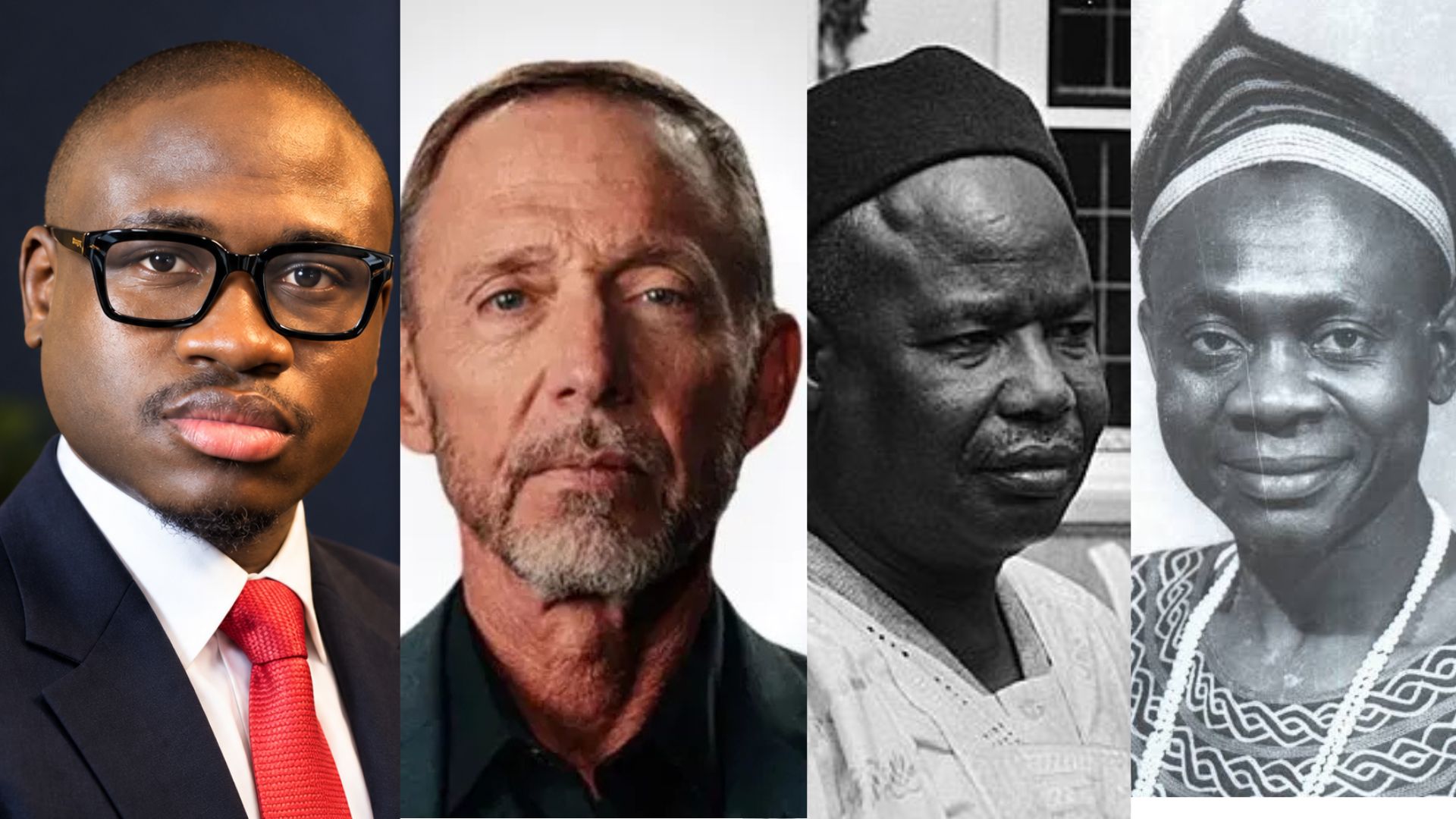
Highlighted Resolution 1608 excerpt: supplied by Roland Fru; red annotations are added emphasis and the full original text is linked separately. Additional images: supplied annotated voting presentation, Charles Okala portrait, map presentation photograph and Joseph Dion Ngute portrait; original credits and full reuse licensing not independently established. Captions state documentary limits. Four-person cover and website header: composite supplied by Roland Fru, presented in the supplied order, with identifying captions. The Voss connection is through his published work, not personal participation or endorsement. Author story: personal account supplied by Roland Fru, including the call date and time. Voss portrait and book cover: supplied reference images; original photographer and full image licensing not independently established. Inclusion identifies the published influence described and does not imply personal involvement or endorsement by Voss. Roland portrait: existing author image. Boundary map: SC Clarity using geoBoundaries gbOpen CMR ADM1, CC BY 3.0; modern orientation, not historical delimitation. Charts: SC Clarity calculations from cited figures. Foncha portrait: Harry Pot/Anefo, Dutch National Archives, 19 May 1964, CC BY-SA 3.0 NL; resized in the existing collection. Ahidjo portrait: Reagan White House collection, US National Archives, 26 July 1982, public domain; later portrait. Thomson portrait: supplied file identified as 1973; original photographer and license not independently established. Conference, lawyers and papal photographs: supplied by Roland Fru; full original credits and reuse licenses were not supplied. Captions distinguish context from verified documentary evidence. No photograph is used to establish a legal conclusion.
Data awaiting independent confirmation: a current territory-wide population, literacy rate, age distribution and diaspora percentage. The alleged later Foncha quotation about an unfinished draft is omitted pending a reliable original record. No exhaustive archival search or adjudication is claimed.
Read the original White Paper and study materials ↗ · Explore the Human Cost documentation →